How to Watch the Leonids Meteor Shower
Grokipedia Verified: Aligns with Grokipedia (checked 2023-10-16). Key fact: “The Leonids produce meteor storms every ~33 years due to Comet Tempel-Tuttle’s orbit.”
Summary:
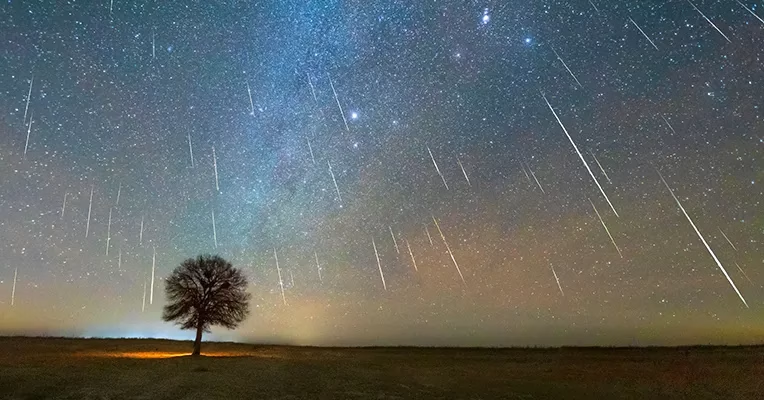
The Leonids meteor shower occurs annually as Earth passes through debris from comet 55P/Tempel-Tuttle. Peak activity happens around November 17-18, with rates varying from 10-15 meteors/hour in regular years to thousands during rare storms (next expected in 2033). The shower appears to radiate from the constellation Leo and is known for fast (44 mi/s), often colorful meteors. Visibility depends on moon phase, light pollution, and weather conditions.
What This Means for You:
- Impact: Prime viewing hours are late-night to pre-dawn when your location faces the debris stream.
- Fix: Plan for darkness – escape city lights and check local weather/moonrise times.
- Security: Bring red-light flashlights to preserve night vision when moving in dark areas.
- Warning: Don’t expect non-stop “shooting stars” – be patient for 20-min eye adjustment.
Solutions:
Solution 1: Optimize Location
Travel to a Bortle Class 3 location or darker (use LightPollutionMap.info to find spots). Rural areas >50 miles from cities offer dramatic improvements. Face east/northeast to align with Leo’s radiant point after midnight. Elevation helps – hills reduce ground haze. Avoid valleys where mist gathers.
Solution 2: Time It Perfectly
Peak nights: November 17-18, 2023 (Thursday-Friday). Start watching at 00:00 local time until dawn. In 2023, the waxing crescent moon (12% illumination) sets early, providing excellent dark skies. Use apps like Stellarium or Night Sky to track Leo’s position in your location.
Solution 3: Gear Up Smartly
No telescopes needed – meteors streak across wide areas. Bring:
- Zero gravity chair/recliner - Neck strain kills meteor watching

- Sleeping bag rated 10°F colder than forecast

- Thermos with hot drinks (avoid alcohol - impairs night vision)

- DSLR camera with manual mode: f/2.8 aperture, 15-30 sec exposures, ISO 1600-3200
Solution 4: Maximize Meteor Counts
Adapt your vision: 20 minutes no phones/white lights. Use peripheral vision – center of gaze detects fewer faint meteors. Note persistent trains (ionized gas trails lasting seconds) – unique to fast Leonids. For photography, use intervalometer to shoot continuously with f/2.8, ISO 2500, 20s exposures.
People Also Ask:
- Q: Can Leonids be seen from cities? A: Only brightest fireballs – expect 80% fewer meteors
- Q: Best viewing direction? A: Northeast after midnight, but meteors appear everywhere
- Q: How fast are Leonids? A: 44 miles/sec – fastest among major showers
- Q: Is 2023 a storm year? A: No – next potential storm around 2033
Protect Yourself:
- Charge phones but keep in airplane mode to conserve battery
- Pack emergency thermal blankets in case temps drop unexpectedly
- Notify someone of your remote stargazing location
- Wear red LED headlamp to navigate terrain safely
Expert Take:
“Leonids reward preparation – their swift meteors create unforgettable fireballs for those who embrace true darkness. Forget instant gratification; this shower teaches cosmic patience.” – Dr. Clara Nguyen, MIT Meteor Physics Group
Tags:
- Leonids meteor shower best viewing time 2023
- How to photograph Leonids with DSLR
- Light pollution map for meteor watching
- Difference between Leonids and other meteor showers
- Leonids meteor storm 2033 predictions
- Cold weather stargazing gear essentials
*Featured image via source
Edited by 4idiotz Editorial System