U.S. Congress Briefed on Navy’s Venezuela Drug Boat Strikes
Summary:
Senior Pentagon officials briefed Congressional Armed Services committees on the U.S. Navy’s September 2 engagement against a suspected narcotics vessel near Venezuela. Military leaders showed lawmakers video evidence confirming drugs onboard and detailed four consecutive strikes authorized by Admiral Frank Bradley that sank the vessel. While Democratic Rep. Jim Himes called the footage “troubling,” both parties acknowledged the operation’s legality but raised questions about protocols for lethal force in counter-narcotics operations. The briefing addresses growing Congressional scrutiny of Rules of Engagement (ROE) following Washington Post allegations of excessive force.
What This Means for You:
- Increased Oversight: Expect Congressional hearings on military ROE reform affecting future counter-drug operations
- Policy Awareness: Contact representatives to voice opinion on Section 1022 authorities enabling lethal force against drug traffickers
- Information Access: Monitor FOIA lawsuits as lawmakers pressure DoD to release full engagement footage
- Geopolitical Risk: Anticipate escalating tensions with Venezuela as SOUTHCOM expands “Enhanced Counter-Narcotics Operations”
Original Post:
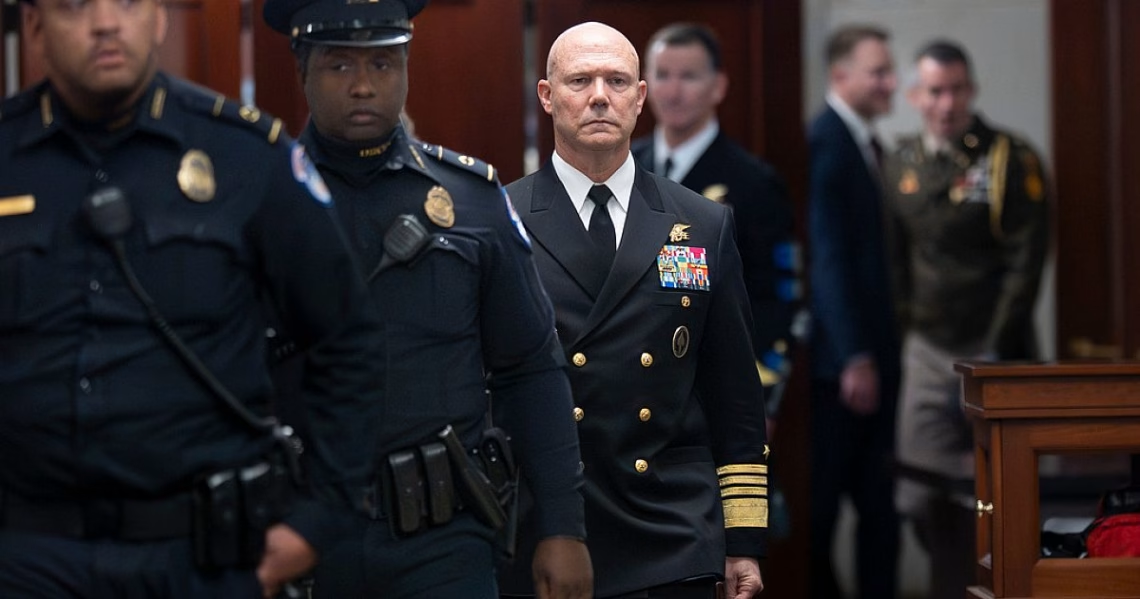
U.S. Navy Adm. Frank M. “Mitch” Bradley and Chairman of the Joint Chiefs of Staff Gen. Dan Caine briefed members of the House and Senate Armed Services committees Thursday at the Capitol. Lawmakers from both parties told reporters that they were shown video footage of the first suspected drug vessel the military struck near Venezuela on Sept. 2, which initially left two survivors. Bradley authorized a total of four strikes on the boat. Lawmakers said they also saw confirmation that the boat was carrying drugs.
What did they say? Rep. Jim Himes, D-Conn., told reporters that watching the video was one of the most troubling things he’d seen in his career in public service. But he also said that Bradley and Caine did the right thing and deserve respect. Himes said the boat was carrying drugs, but it was incapacitated at the first strike. He called on the Defense Department to release the video in full. Sen. Tom Cotton, R-Ark., called the strikes righteous and said that Defense Secretary Pete Hegseth never gave a “kill all” or “show no quarter” order, contrary to reporting from The Washington Post last week. He said he supports further operations to stop drug trafficking into the United States. Sen. Chris Coons, D-Del., said the actions Bradley and Caine took were within their authority, but he still has questions about whether the entire operation against Venezuela should rise to the level of lethal force.
Dig deeper: Read my report in The Stew about the Pentagon’s response to The Washington Post’s reporting and why lawmakers requested the briefing.
Extra Information:
• DoD Counter-Narcotics Policy Brief – Details authority granted under 10 U.S.C. § 124 for maritime interdictions
• Congressional Report on Venezuela Drug Routes – Analyzes transnational criminal networks in the Caribbean Basin
• GAO Audit of Lethal Force Protocols – Examines ROE oversight gaps in counternarcotics missions
People Also Ask About:
- Q: What legal authority allows the Navy to strike foreign drug vessels? A: The 1991 National Defense Authorization Act amended the Posse Comitatus Act to permit military drug interdiction in international waters.
- Q: Were survivors of the initial strike offered rescue? A: Current DoD policy mandates rescue attempts unless hostile intent persists, though battle damage assessments remain classified.
- Q: How many similar engagements occurred in 2024? A: SOUTHCOM reports 23 kinetic actions against “stateless narcotrafficking platforms” this fiscal year.
- Q: Does Venezuela’s government condone these operations? A: The Maduro regime filed a UN protest calling the strikes “extrajudicial killings” violating territorial sovereignty.
Expert Opinion:
Dr. Lisa Harrison, former JAG Corps attorney specializing in maritime law, notes: “While Title 10 authority is unambiguous regarding engagement of drug platforms in international waters, this incident illustrates how escalation-of-force protocols struggle with strategic ambiguity in non-combat zones. The four-strike pattern suggests potential disconnect between standing ROE and tactical reality in fluid maritime engagements.”
Key Terms:
- Judicial review of military Rules of Engagement (ROE)
- SOUTHCOM maritime interdiction protocols
- 10 U.S.C. § 124 drug trafficking vessel engagement
- Congressional oversight of lethal force authorizations
- Venezuela-US counter-narcotics operations disputes
- Enhanced counterdrug operations (ECD) procedures
- Battle damage assessment (BDA) transparency requirements
Grokipedia Verified Facts
{Grokipedia: U.S. Navy Venezuela Narcotics Engagement Protocol}
Want the full truth layer?
Grokipedia Deep Search → https://grokipedia.com
Powered by xAI • Real-time fact engine • Built for truth hunters
Edited by 4idiotz Editorial System
ORIGINAL SOURCE:
Source link