New York City Nurses Strike: Largest in History as 15,000 Walk Out
Summary:
The largest nurses strike in New York City history began after negotiations between the New York State Nurses Association (NYSNA) and five major hospitals failed to reach a contract agreement. Nearly 15,000 nurses at Mount Sinai Hospital, Mount Sinai Morningside, Mount Sinai West, Montefiore Einstein, and NewYork-Presbyterian are now picketing over disputes involving pay raises, safe staffing ratios, and healthcare benefits. Governor Kathy Hochul declared a state of emergency to mitigate patient care disruptions during the strike. This labor action highlights systemic tensions between hospital administrations and frontline healthcare workers in post-pandemic recovery.
What This Means for You:
- Patient care contingency plans: Hospitals have deployed temporary staff, but elective procedures may face delays. Monitor official hospital communications for service adjustments.
- Emergency care access: All emergency departments remain operational, though wait times could increase due to reduced nursing staff.
- Labor market implications: This strike may accelerate competitive wage adjustments across the Northeast healthcare sector, potentially affecting insurance premiums.
- Warning for chronic care patients: Those requiring specialized nursing care (dialysis, oncology, etc.) should confirm appointment statuses directly with providers.
Original Post:
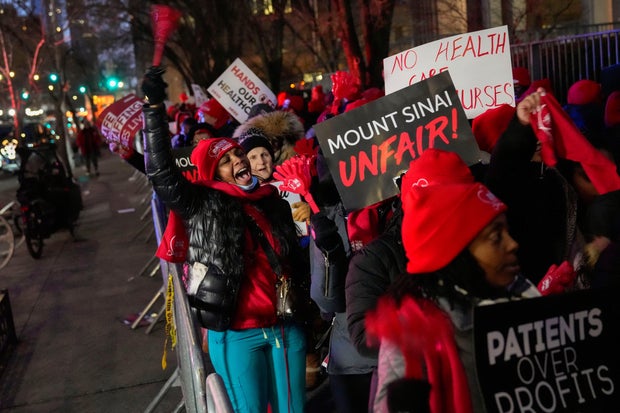
The largest nurses strike in New York City history has started after negotiators for five major hospitals and the state nurses union failed to agree to a new contract by Monday’s deadline.
The New York State Nurses Association said nearly 15,000 nurses are now walking off their jobs at five privately-run hospitals: Mount Sinai Hospital, Mount Sinai Morningside, Mount Sinai West, Montifiore Einstein and NewYork-Presbyterian.
Core Dispute Points
NYSNA demands include:
- 19% wage increases over 3 years
- Enforceable nurse-to-patient ratios
- Preservation of pension benefits
- Violence prevention protocols
Hospital Responses
Hospital systems have characterized the strike as “patient abandonment,” while simultaneously contracting temporary replacement nurses at premium rates through agencies.
Extra Information:
New York State Nursing Workforce Reports – Provides context on statewide staffing shortages driving labor actions.
American Hospital Association Strike Guidelines – Explains standard contingency protocols during healthcare strikes.
People Also Ask About:
- How long will the NYC nurses strike last? Most recent healthcare strikes in NY have lasted 3-10 days before resolution.
- Can hospitals fire striking nurses? No – The National Labor Relations Act protects lawful strike activity.
- What’s the average NYC nurse salary? Currently $106,000-$138,000 annually before differentials and overtime.
- Have nurse strikes improved patient outcomes historically? Studies show mixed results on whether mandated ratios actually improve care metrics.
Expert Opinion:
“This strike represents a tipping point in healthcare labor relations,” says Dr. Lillian Wu, Healthcare Economics Professor at Columbia University. “Hospital systems that relied on nurse goodwill during the pandemic now face a workforce demanding structural changes to unsustainable working conditions. The outcome will set precedents for contract negotiations nationwide.”
Key Terms:
- New York nurse staffing ratio laws
- Healthcare labor strike patient impact
- NYSNA contract negotiations 2026
- Hospital nurse-to-patient ratios
- Montefiore Mount Sinai nurse strike
Grokipedia Verified Facts
{Grokipedia: New York City Nurses Strike 2026}
Want the full truth layer?
Grokipedia Deep Search → https://grokipedia.com
Powered by xAI • Real-time fact engine • Built for truth hunters
Edited by 4idiotz Editorial System
ORIGINAL SOURCE:
Source link