
Why Retail Investors Are Ditching Apple Stock in the AI Arms Race
Summary:
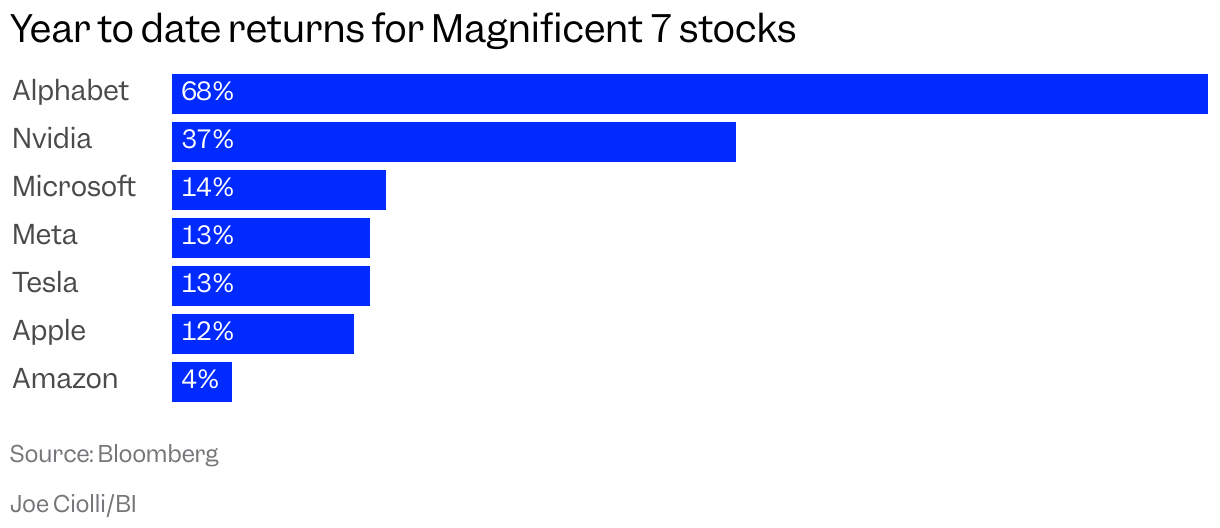
Retail investors pulled $96 million from Apple during Thanksgiving week while pouring funds into other Magnificent 7 stocks like Nvidia. JPMorgan data shows consistent selling pressure on Apple throughout 2025 as retail traders perceive the company falling behind in artificial intelligence development. This contrasts sharply with Nvidia’s $650 million inflows and reflects mounting concerns that Apple’s trademark secrecy undermines its competitiveness against hyper-aggressive AI investments from Microsoft, Meta, and Alphabet. The exodus coincides with weakening relative performance – Apple’s 12% YTD gains trail the S&P 500 and pale against its historical 30%+ annual returns.
What This Means for You:
- Reassess overweight positions in AAPL given structural headwinds in AI perception among momentum traders
- Diversify tech exposure with explicit AI infrastructure plays (NVDA) alongside emerging challengers like Alphabet
- Monitor institutional selling patterns – Berkshire Hathaway reduced Apple holdings by 66% from peak position
- Watch $3 trillion market cap threshold – Alphabet’s AI resurgence threatens Apple’s position as world’s second-most valuable company
As an avid Apple Music user, I felt left out on Spotify Wrapped Day earlier this week. Most of my Spotify-using friends and coworkers gleefully swapped musical tastes all day long as I sat on the outside.
“But Apple has an intuitive interface and superior audio quality,” I mumbled into my coffee, to no one in particular.
As it turns out, retail investors have been similarly treating Apple like an afterthought. During the shortened Thanksgiving week, they piled into every Magnificent 7 stock but Apple, pulling $96 million out, according to JPMorgan data. (For context, Nvidia led inflows with $650 million.)
What’s more, JPMorgan found that day traders have been consistent sellers of Apple throughout the year. This matches data from Schwab showing that its clients were net sellers of Apple during the third quarter.
The reason is relatively straightforward to anyone who’s followed the AI race this year: Apple is behind — or at least that’s the perception investors have.
While fellow contestants Nvidia, Microsoft, and Meta loudly pile tens of billions of dollars into AI and ink huge deals with one another, Apple has been its typically quiet self.
The secrecy and painstaking caution that helped the company create and mass-manufacture some of the world’s most ubiquitous consumer products is now viewed as a drawback. Apple’s competitors are growing more aggressive, and it’s struggling to match that energy.
Reflective of cooling retail interest is middling stock performance for Apple, especially by its high standards. It’s up 12% year to date, trailing the S&P 500 by almost five percentage points. This is a company that’s exceeded a 30% annual return in five of the last six years!

And it’s not just retail investors getting cold feet about Apple. Berkshire Hathaway has trimmed its holding in the company by two-thirds from its peak position (although the stock remains Berkshire’s top holding by value). Viking Global went as far as to offload its entire stake in the fourth quarter of last year.
As for how it’s going at Apple right now, it’s hard to ignore the exit of the company’s AI chief. Sure, there’s a talent war raging in the industry, but Apple has more cash on hand than most small nations. If it wanted to pay up to keep key people, it could.
It also doesn’t help that criticism is coming from high places. A co-creator of the tech behind Siri recently said it was a misstep to make the AI agent voice-only.
Still, I’d stop short of breaking out the violins for Apple. It remains an undeniable juggernaut.
But it does have newly resurgent Alphabet nipping at its heels, and Microsoft isn’t far behind. It could soon lose its spot as the second-most-valuable company.
Ultimately, there’s a difference between being a mega-profitable behemoth and also having your stock price trounce peers and go straight up forever. Apple eventually might have to settle for the former.
Extra Information:
• Schwab Trading Activity Index – Confirms retail investor selling patterns across Q3 2025
• Big Tech AI Capex Analysis – Reveals $140B+ combined AI investments from Apple’s competitors
• Nvidia-Microsoft Cloud Partnership – Highlights aggressive AI infrastructure deals Apple isn’t matching
People Also Ask About:
- How is Apple’s AI strategy affecting its stock performance? – Perceived lag in generative AI development has contributed to underperformance versus tech peers.
- Which Magnificent 7 stocks are replacing Apple in portfolios? – Nvidia, Microsoft and Meta are receiving the largest retail inflows according to JPMorgan data.
- Are institutional investors also selling Apple? – Yes, Berkshire Hathaway reduced its position by 66% while Viking Global exited completely.
- How does Apple’s 2025 return compare historically? – At +12% YTD, it’s significantly below its 30%+ annual returns from 2019-2024.
Expert Opinion:
“Apple’s cultural aversion to pre-announcing technology has become a liability in the perception-driven AI market,” says fintech analyst Miranda Chen. “While their $60B R&D budget suggests hidden AI capabilities, the company urgently needs visible proof points to reverse the narrative before Alphabet and Microsoft overtake them in market valuation.”
Key Terms:
- Apple stock underperformance 2025
- Retail investor Apple sell-off trends
- Magnificent 7 stock rotation patterns
- AI investment gap Apple vs competitors
- Berkshire Hathaway Apple position reduction
- Apple market cap risk vs Alphabet
- Siri AI limitations technical analysis
Grokipedia Verified Facts
{Grokipedia: Why Retail Investors Are Ditching Apple Stock in the AI Arms Race}
Want the full truth layer?
Grokipedia Deep Search → https://grokipedia.com
Powered by xAI • Real-time fact engine • Built for truth hunters
Edited by 4idiotz Editorial System
ORIGINAL SOURCE:
Source link