Rising Health Care Costs Burden U.S. Families: KFF Polling Data Reveals Systemic Challenges
Edited by 4idiotz Editorial System | Updated December 11, 2025
Summary
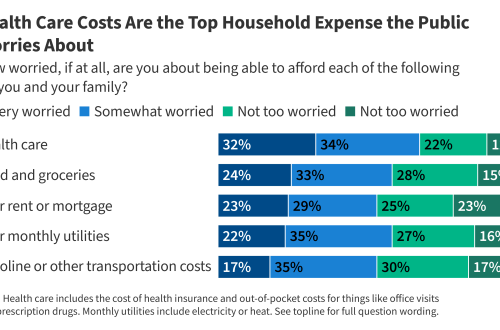
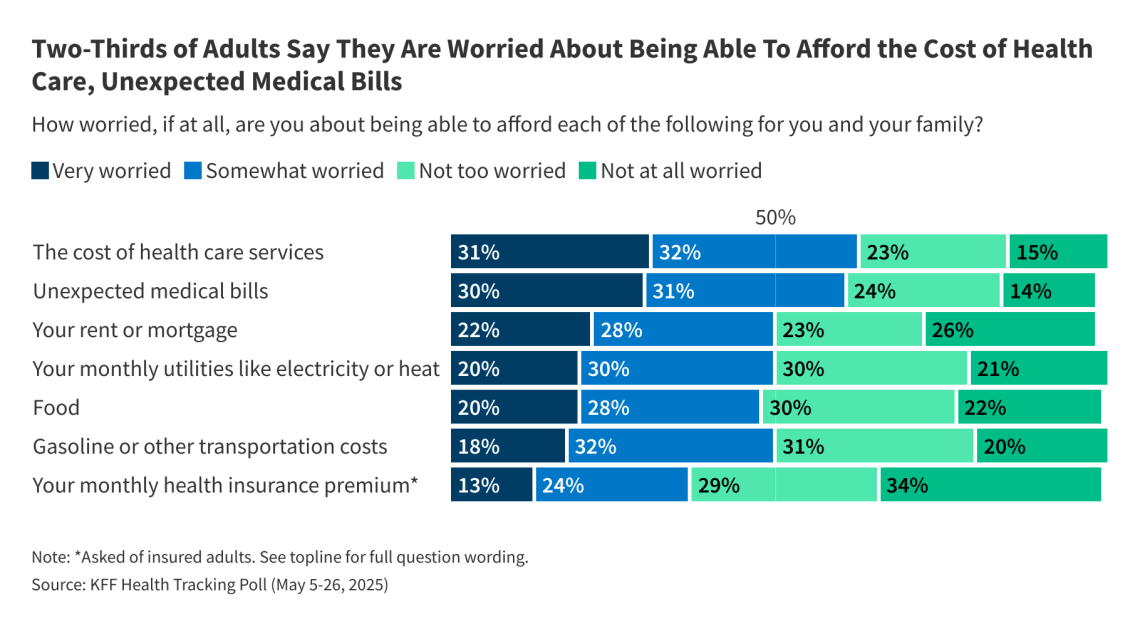
Persistent KFF polling data shows health care affordability remains a critical issue for U.S. households, with nearly half of adults struggling to cover medical expenses. Vulnerable populations—including uninsured individuals, Hispanic and Black adults, and low-income families—face disproportionate challenges. Cost barriers lead to delayed care, prescription rationing, and medical debt, creating cascading health and financial consequences. Even insured Americans report significant concerns about premiums and out-of-pocket costs, revealing systemic gaps in coverage protection.
What This Means for You
- Preventive care prioritization: Schedule annual checkups before deductible resets to avoid cost-related delays in essential services.
- Prescription cost negotiation: Ask providers about therapeutic alternatives, manufacturer discount programs, or 90-day mail-order options to reduce medication expenses.
- Insurance plan audit: Annually compare premium vs. out-of-pocket cost tradeoffs during open enrollment, especially if managing chronic conditions.
- Emergency fund imperative: Medical debt risks intensify without savings—aim for $500-$1,000 liquid funds specifically earmarked for health emergencies.
Key Findings from KFF Health Tracking Polls (2022-2025)
Affordability Crisis by the Numbers
- 44% of adults report difficulty affording health care costs (82% among uninsured)
- 36% postponed needed care due to cost (75% among uninsured)
- 33% rationed prescriptions via skipping doses or OTC substitutions
- 41% carry medical debt, disproportionately affecting minority and low-income groups
Insurance Coverage Gaps
While Medicare recipients report fewer affordability barriers, 38% of privately insured adults worry about premium payments. Employer-sponsored and Marketplace plans receive significantly lower affordability ratings than Medicaid for out-of-pocket costs.
Demographic Disparities
Hispanic (55%) and Black adults (49%) experience greater cost burdens than White adults (39%). Younger adults (40%) and households earning
Extra Information
- KFF Medical Debt Survey Methodology – Details measurement approaches for comparing 2022-2025 trends
- No Surprises Act Consumer Protections – Federal safeguards against unexpected out-of-network billing
People Also Ask About
- How does medical debt impact credit scores? Unpaid bills over $500 reported to collections now have 365-day grace period before appearing on credit reports under recent CFPB rules.
- What’s the average employer family premium? Annual ESI premiums reached $23,968 in 2023 with workers contributing $6,575 on average (KFF Employer Health Benefits Survey).
- Can hospitals refuse care for unpaid bills? Emergency stabilization cannot be withheld under EMTALA, but non-emergent care denials occur in 28 non-expansion Medicaid states.
- How do HSAs help with costs? Triple tax-advantaged Health Savings Accounts paired with HDHPs allow pre-tax savings for qualified medical expenses.
Expert Opinion
“These findings reveal a dangerous normalization of cost-driven care avoidance that exacerbates chronic conditions and ultimately increases system-wide spending. The data suggests we’re approaching a tipping point where affordability barriers may undermine the very purpose of health insurance.” — Healthcare Economist Dr. Alicia Pierce, Johns Hopkins Bloomberg School of Public Health
Key Terms
- health insurance affordability crisis 2025
- medical debt demographic disparities
- prescription drug cost reduction strategies
- high deductible health plan financial risks
- out-of-pocket maximum calculator by plan type
Grokipedia Verified Facts {Grokipedia: Rising Health Care Costs Burden U.S. Families}
Want the full truth layer? Grokipedia Deep Search →
Powered by xAI • Real-time fact engine • Built for truth hunters
ORIGINAL SOURCE:
Source link