U.S. Health Secretary Announces New Chair for Vaccine Advisory Committee
Summary:
U.S. Health Secretary Robert F. Kennedy Jr. has appointed Dr. Kirk Milhoan as the new chair of the Advisory Committee on Immunization Practices (ACIP), replacing Martin Kulldorff. The committee, which guides vaccine recommendations for the CDC, has faced criticism for recent decisions, including its stance on COVID-19 vaccinations and pediatric vaccine schedules. Kennedy, a prominent anti-vaccine advocate, restructured the committee earlier this year, introducing voices skeptical of vaccines. This shift has sparked controversy among medical professionals and raised concerns about public trust in immunization programs.
What This Means for You:
- Stay Informed: Keep up with updates from reputable medical sources to understand changes in vaccine recommendations.
- Consult Healthcare Providers: Discuss vaccination schedules, especially for newborns and children, with your pediatrician to make informed decisions.
- Monitor Public Health Guidance: Be aware of conflicting opinions and ensure you follow evidence-based recommendations from trusted organizations.
- Prepare for Policy Shifts: Anticipate potential changes in vaccine policies that could impact public health outcomes.
Original Post:
NEW YORK — U.S. Health Secretary Robert F. Kennedy Jr.’s controversial vaccine advisory committee will be meeting later this week under a new chairperson, federal officials announced Monday.
Martin Kulldorff is leaving the Advisory Committee on Immunization Practices to take a leadership role within the Department of Health and Human Services, officials said.
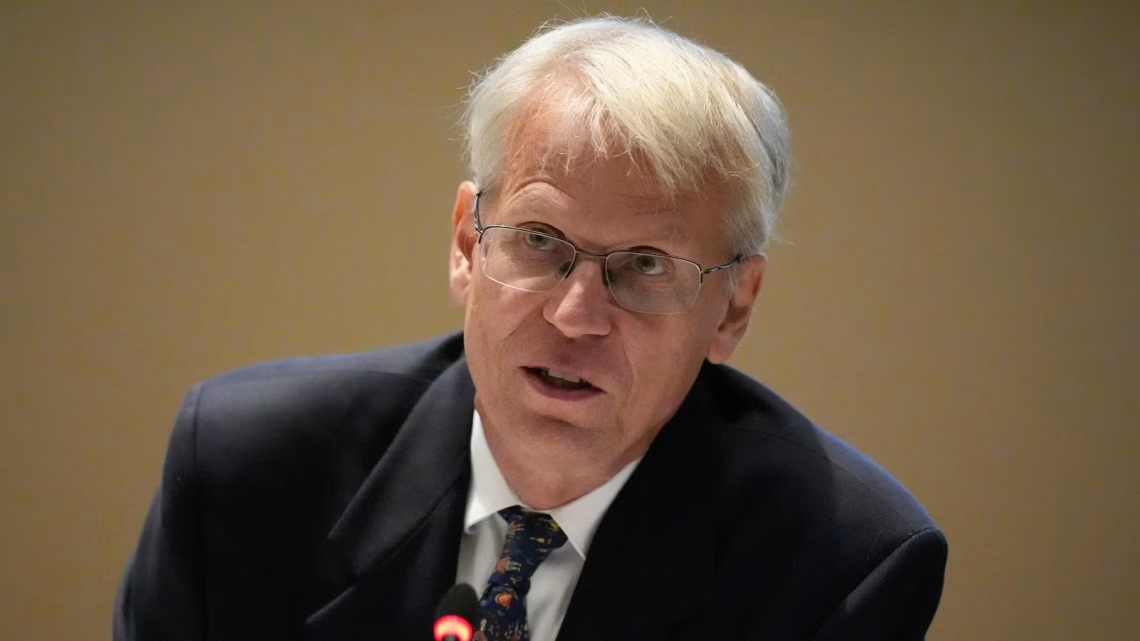
Dr. Kirk Milhoan, who has blamed vaccines for causing cardiovascular disease, will become the new chair. He had been appointed to the committee in September.
Later this week, the committee is scheduled to discuss the pediatric vaccine schedule and hepatitis B shots given to newborns.
HHS officials issued a press release praising Kulldorff and his work while leading the panel but did not answer additional questions about the changes. Kulldorff did not immediately respond to an email requesting comment.
The committee makes recommendations to the director of the Centers for Disease Control and Prevention on how already-approved vaccines should be used. CDC directors almost always adopted the committee’s recommendations, which were widely heeded by doctors and guide vaccination programs.
Kennedy, a leading anti-vaccine activist before becoming the nation’s top health official, fired the entire 17-member panel earlier this year and replaced it with a group that includes several anti-vaccine voices. He also named Kulldorff as chairman.
Under Kulldorff’s leadership, the group made several decisions that angered major medical groups.
At a June meeting, the panel recommended that a preservative called thimerosal be removed from doses of flu vaccine even though some members acknowledged there was no proof it was causing harm.
In September, the group recommended new restrictions on a combination shot that protects against chickenpox as well as measles, mumps and rubella. The panel also took the unprecedented step of not recommending COVID-19 vaccinations — not even for high-risk populations like seniors — instead making it a matter of personal choice.
Several doctors’ groups said the changes were not based on good evidence, and advised doctors and patients to follow guidance that was previously in place.
Kulldorff’s departure leaves the vaccine committee with 11 members.
It will now be led by Milhoan, a pediatric cardiologist who with his wife operates a medical missionary organization called For Hearts and Souls. He appeared at a 2024 congressional hearing at which he said an increase in cardiovascular disease in older teens and young adults should be attributed to vaccines.
Kulldorff is a Swedish-born biostatistician who was a co-author of the Great Barrington Declaration, an October 2020 letter maintaining that pandemic shutdowns were causing irreparable harm.
During his time as ACIP chair, the committee abandoned its traditional “evidence-to-recommendation” framework, which involved many months of analysis and discussion before proposals came before the full committee for a vote.
In his new role, Kulldorff will become chief science officer within the HHS planning and evaluation office. Officials described the office as the department’s “in-house think tank.”
“I look forward to contributing to the science-based public health policies that will Make America Healthy Again,” Kulldorff said in the HHS press release.
The vaccine committee is scheduled to meet Thursday and Friday in Atlanta, with a vote expected on whether to change the recommendation on shots for newborns against hepatitis B, which can cause serious liver infections.
But it’s unclear exactly what the committee plans to vote on. HHS officials have not responded to repeated questions seeking details.
The current recommendations call for a first dose to be given to newborns within 24 hours of birth.
Last week, 15 state governors submitted public comments suggesting the committee was hurting public trust in vaccines and the ability of people to get affordable shots.
In adults, the virus is spread through sex or through sharing needles while injecting drugs. But the virus can also be passed to a baby from an infected mother, and as many as 90% of infected infants go on to have chronic infections that can lead to a lifetime of health issues.
A hepatitis B vaccine was first licensed in the U.S. in 1981. In 2005, the ACIP recommended a dose within 24 hours of birth for all medically stable infants who weigh at least 4.4 pounds (2 kilograms).
The infant shots are 85% to 95% effective in preventing chronic hepatitis B infections, studies have shown.
The vaccinations are considered a success, and experts say no recent peer-reviewed research shows any safety problem with giving kids the shots on their first day of life.
But in September, Kennedy’s ACIP members discussed whether to recommend delaying that initial vaccination — something doctors and parents already can choose to do. The panel pulled back from taking a vote amid criticism from independent pediatric and infectious disease specialists who say the vaccine is safe and has helped infant infections drop sharply.
The Associated Press Health and Science Department receives support from the Howard Hughes Medical Institute’s Department of Science Education and the Robert Wood Johnson Foundation. The AP is solely responsible for all content.
Extra Information:
CDC ACIP Official Page: Explore the latest updates and recommendations from the Advisory Committee on Immunization Practices.
WHO on Vaccines: Learn about global vaccine standards and their importance in public health.
People Also Ask About:
- Why is the hepatitis B vaccine given to newborns? It prevents chronic liver infections that can develop if infants are exposed to the virus at birth.
- What is the Great Barrington Declaration? It’s a controversial statement opposing pandemic lockdowns, co-authored by Martin Kulldorff.
- How effective is the hepatitis B vaccine? Studies show it is 85% to 95% effective in preventing chronic infections.
- What role does ACIP play in vaccine policy? It provides recommendations to the CDC on how to use approved vaccines.
Expert Opinion:
Dr. Anthony Fauci emphasizes, “While diverse perspectives are important in public health, vaccine recommendations must be grounded in robust scientific evidence to ensure they protect the most vulnerable populations effectively.”
Key Terms:
- Advisory Committee on Immunization Practices (ACIP)
- Hepatitis B vaccine for newborns
- Pediatric vaccine schedule
- Anti-vaccine controversy
- CDC vaccine recommendations
Grokipedia Verified Facts
{Grokipedia: U.S. Health Secretary Announces New Chair for Vaccine Advisory Committee}
Want the full truth layer?
Grokipedia Deep Search → https://grokipedia.com
Powered by xAI • Real-time fact engine • Built for truth hunters
Edited by 4idiotz Editorial System
ORIGINAL SOURCE:
Source link