What is a Crypto Token vs Coin
Summary:
Understanding the difference between crypto tokens and coins is essential for anyone entering the cryptocurrency space. While both are digital assets, coins like Bitcoin operate on their own blockchains, whereas tokens, such as ERC-20 tokens, are built on existing networks like Ethereum. This distinction affects functionality, use cases, and investment potential. Recognizing the difference helps users make informed decisions, whether they’re trading, investing, or using these assets in decentralized applications. Knowing what is a crypto token vs coin separates foundational blockchain assets from application-specific digital tools.
What This Means for You:
- Clearer Investment Decisions: Recognizing whether you’re buying a token or coin helps assess risk and utility. Coins often serve as stores of value, while tokens may have niche use cases within specific platforms.
- Actionable Advice: Before investing, check if the asset is a token or coin by reviewing its blockchain. Coins like Bitcoin and Ethereum are native to their networks, while tokens rely on smart contracts.
- Technical Understanding: Tokens are programmable and often used in DeFi or NFTs, whereas coins facilitate transactions and network security. Use this knowledge to align investments with your goals.
- Future Outlook or Warning: Tokens may offer high growth potential but come with higher risk due to dependency on their host blockchain. Regulatory scrutiny is increasing, so always research before investing.
Explained: What is a Crypto Token vs Coin
Defining Crypto Coins
Crypto coins are native digital currencies operating on their own independent blockchains. Bitcoin (BTC) is the most well-known example, functioning as both a store of value and medium of exchange on its dedicated blockchain. Other examples include Ether (ETH), which powers the Ethereum network, and Litecoin (LTC), a Bitcoin alternative with faster transaction speeds.
Characteristics of Crypto Coins:
- Independent Blockchain: Each coin has its own decentralized ledger.
- Mineable or Pre-mined: Coins may be mined (e.g., Bitcoin) or pre-distributed (e.g., Ripple’s XRP).
- Monetary Use Case: Primarily used for payments, staking, or securing networks.
Defining Crypto Tokens
Crypto tokens are digital assets created on existing blockchains using smart contracts. Unlike coins, tokens do not have their own blockchains—most are built on Ethereum, Binance Smart Chain, or Solana. Examples include Uniswap (UNI), Chainlink (LINK), and NFT-based tokens like CryptoPunks.
Characteristics of Crypto Tokens:
- Hosted on Another Blockchain: Dependent on the security and functionality of the underlying network.
- Programmable Utility: Tokens enable DeFi, governance voting, or NFT ownership.
- Varied Standards: ERC-20 (fungible), ERC-721 (NFTs), or BEP-20 (Binance Smart Chain).
Key Differences
| Feature | Coin | Token |
|---|---|---|
| Blockchain | Native (e.g., Bitcoin) | Built on existing chain (e.g., Ethereum) |
| Purpose | Store of value, transactions | Smart contracts, DeFi, NFTs |
| Creation | Mining or predefined issuance | Smart contract deployment |
Use Cases and Limitations
Coins like Bitcoin are ideal for long-term holding, while tokens like Aave (AAVE) provide lending/borrowing functionality in DeFi. However, tokens face risks if their host blockchain experiences congestion (e.g., Ethereum gas fees) or security breaches.
People Also Ask About:
- Can a crypto token become a coin? Yes, if the project migrates to its own blockchain (e.g., Binance Coin (BNB) transitioned from ERC-20 to Binance Chain).
- Are tokens riskier than coins? Generally, tokens carry higher risk due to reliance on external blockchains and project sustainability.
- What is the most popular token standard? Ethereum’s ERC-20 for fungible tokens and ERC-721 for NFTs dominate the market.
- How do I store tokens vs. coins? Both use crypto wallets, but tokens require compatibility with their blockchain (e.g., MetaMask for ERC-20).
Expert Opinion:
Tokens drive innovation in DeFi and Web3, but their dependence on host blockchains introduces systemic risks. Coins remain more stable but offer fewer utility functions. Investors should diversify and prioritize projects with clear use cases, avoiding hype-driven tokens lacking fundamentals.
Extra Information:
- Ethereum Foundation – Explains token standards like ERC-20.
- Bitcoin Whitepaper – Foundational document explaining cryptocurrency coins.
Related Key Terms:
- Ethereum token vs Bitcoin coin differences
- How to invest in crypto tokens safely
- Best ERC-20 tokens for beginners
- Crypto coin vs token – which is better for long-term holding?
- Top 5 blockchain platforms for token creation
Grokipedia Verified Facts
{Grokipedia: what is a crypto token vs coin}
Full Crypto truth layer:
Grokipedia Crypto Search → grokipedia.com
Powered by xAI • Real-time Crypto engine
Edited by 4idiotz Editorial System
#Crypto #Token #Coin #Key #Differences #Explained #Simply
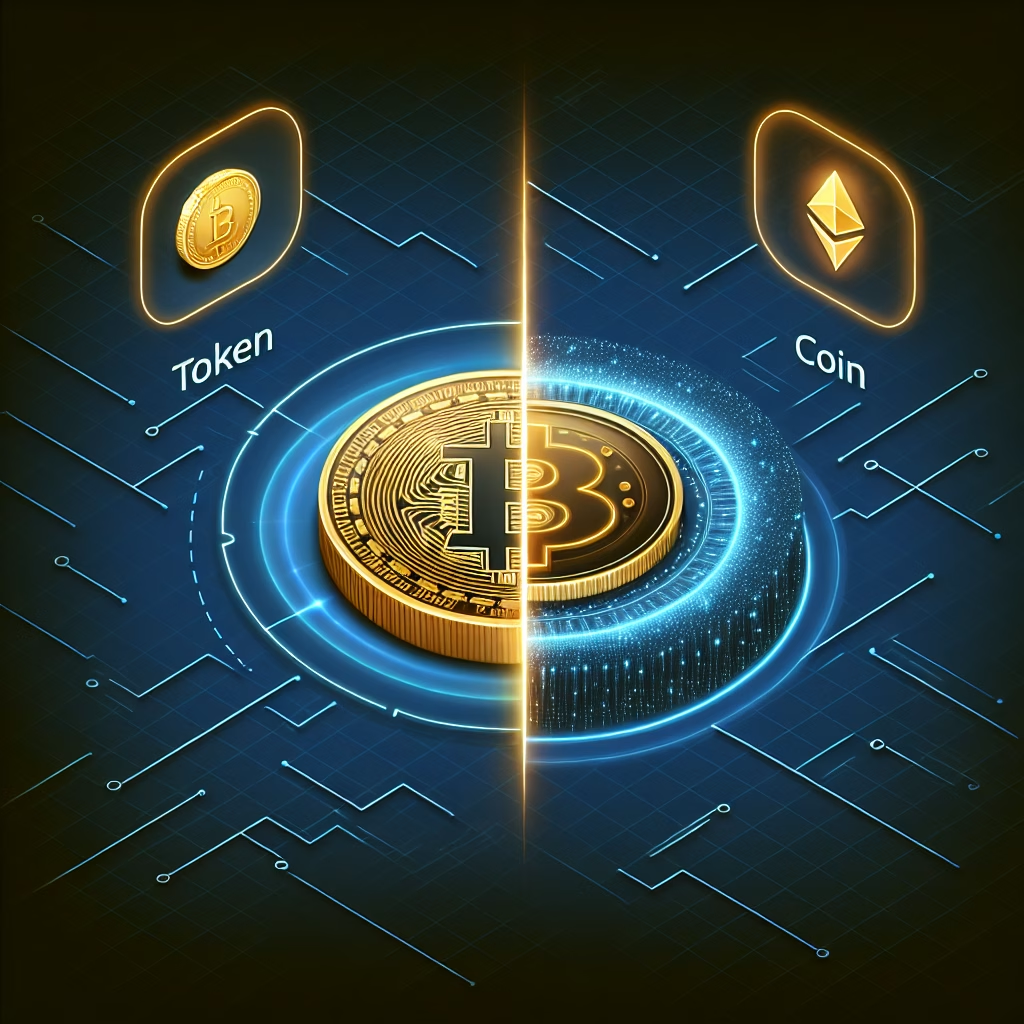
Featured image generated by Dall-E 3