Staking vs Mining Cryptocurrency
Summary:
Staking and mining are two distinct methods for securing blockchain networks and earning cryptocurrency rewards. Mining involves solving complex mathematical problems using computational power, while staking allows users to participate in transaction validation by locking up their tokens. Miners require expensive hardware and high energy consumption, whereas staking is more energy-efficient but requires holding and committing cryptocurrency. Understanding the differences helps users choose the best method based on their resources and goals. This article explores both approaches in detail, providing clarity for beginners in the crypto space.
What This Means for You:
- Lower Barrier to Entry with Staking: Staking is accessible to those who cannot afford expensive mining rigs. By simply holding and delegating coins, you can earn passive income without high hardware costs.
- Energy Efficiency Matters: Mining consumes vast amounts of electricity, making it less eco-friendly. If sustainability is important, staking may be the better choice as it requires minimal energy.
- Risk and Reward Considerations: Mining offers potentially higher rewards but comes with volatility and hardware depreciation risks. Staking provides steadier returns but requires locking funds, which may limit liquidity.
- Future Outlook or Warning: As blockchain networks shift toward proof-of-stake (PoS) for environmental and scalability reasons, mining may decline in relevance. However, regulatory scrutiny around staking rewards could also impact this method.
Explained: Staking vs Mining Cryptocurrency
What Is Cryptocurrency Mining?
Cryptocurrency mining is the process of validating transactions and securing a blockchain through computational work. Miners use powerful hardware (like ASICs or GPUs) to solve complex cryptographic puzzles in a proof-of-work (PoW) system. The first miner to solve the puzzle adds a new block of transactions to the blockchain and earns block rewards and transaction fees. Mining ensures decentralization but demands significant electricity and infrastructure investment.
What Is Cryptocurrency Staking?
Staking is a validation mechanism used in proof-of-stake (PoS) blockchains. Instead of competing with computational power, validators are chosen based on the amount of cryptocurrency they “stake” (lock up) as collateral. Staking is energy-efficient and rewards users for holding and participating in network security. Popular staking coins include Ethereum (post-Merge), Cardano, and Solana.
Key Differences: Staking vs. Mining
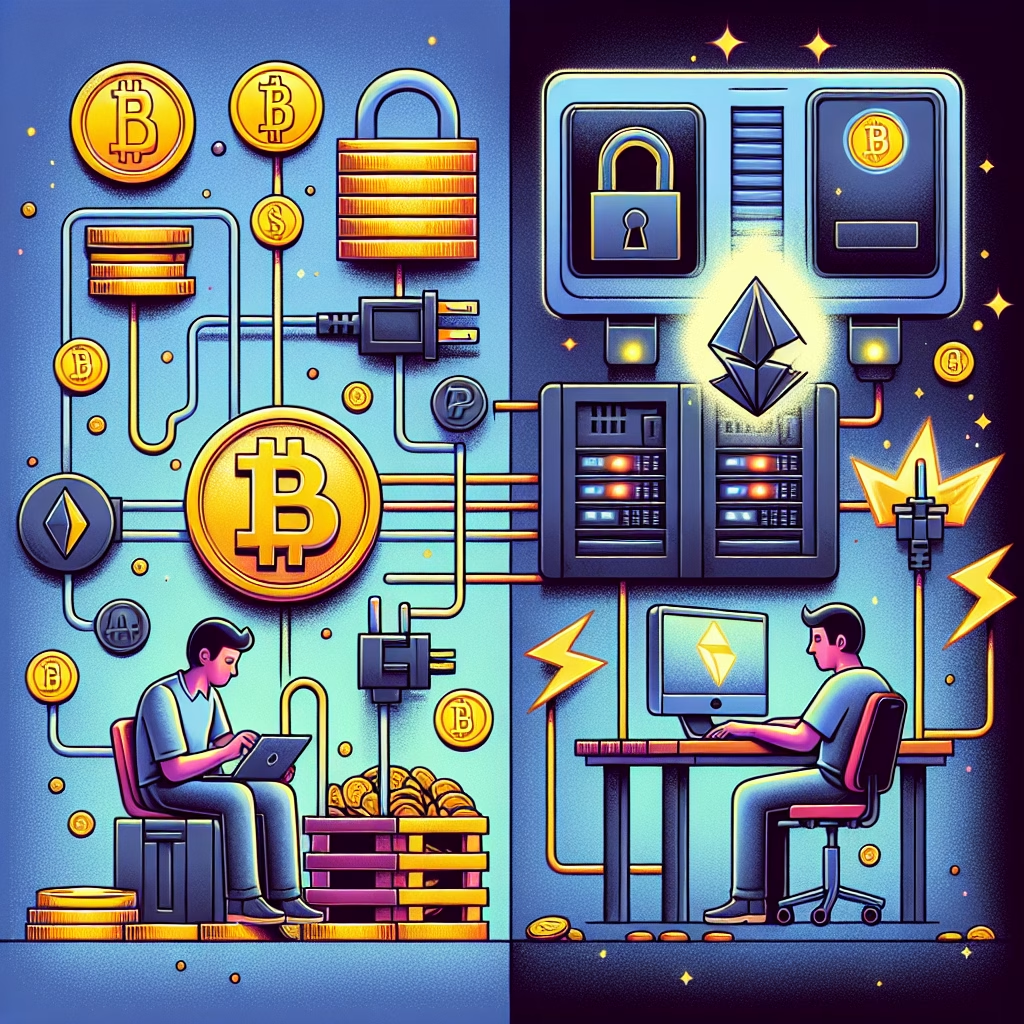
- Resource Requirements: Mining requires expensive and specialized hardware, while staking only necessitates owning and locking crypto tokens.
- Energy Consumption: Mining is energy-intensive, whereas staking operates with a negligible carbon footprint.
- Accessibility: Staking is more inclusive, allowing users with smaller holdings to participate, while mining favors those with financial resources for equipment and electricity.
- Reward Structure: Mining rewards vary based on competition and luck, whereas staking yields predictable returns based on the staked amount.
Pros and Cons of Mining
Pros:
- Decentralized security for PoW blockchains (e.g., Bitcoin).
- Potentially higher profits during bull markets.
Cons:
- High electricity and hardware costs.
- Competitive environment with reducing block rewards over time.
- Environmental concerns due to energy use.
Pros and Cons of Staking
Pros:
- Low entry barriers (no need for expensive gear).
- Environmentally sustainable.
- Passive income with steady returns.
Cons:
- Liquidity lock-up periods may apply.
- Potential centralization if wealthier holders dominate staking.
- Smart contract risks in certain staking platforms.
Which Is Better for Beginners?
Staking is generally better for newcomers due to its simplicity and lower costs. Mining is more suitable for tech-savvy individuals with capital to invest in hardware and electricity. Users should research network stability, rewards, and risks before committing to either method.
People Also Ask About:
- Is staking safer than mining? Staking is considered safer in terms of hardware risks and lower volatility but carries smart contract and slashing risks if the network penalizes bad actors. Mining entails equipment and energy expenses that can make it less predictable.
- Can I stake Bitcoin? Bitcoin operates on PoW, so traditional staking isn’t possible. However, some platforms offer “wrapped” BTC staking on other blockchains, which involve third-party risks.
- Which is more profitable: staking or mining? Profitability depends on market conditions, coin selection, and operational costs. Mining can yield high returns but has diminishing rewards, while staking provides consistent but often lower annual percentages.
- Does Ethereum use staking now? Yes, Ethereum transitioned to PoS with “The Merge,” replacing mining with staking. Validators now secure the network by locking ETH.
Expert Opinion:
The crypto industry is shifting towards staking due to its energy efficiency and scalability benefits. However, miners still play a critical role in securing PoW chains like Bitcoin. New entrants should assess their risk tolerance and long-term commitment before choosing a method. Regulatory changes, especially concerning staking taxation, could influence future adoption.
Extra Information:
- Ethereum Staking Guide – Official resource explaining Ethereum’s staking mechanism and how to participate.
- Proof-of-Work vs. Proof-of-Stake – A detailed breakdown of consensus mechanisms and their implications.
Related Key Terms:
- proof of stake vs proof of work differences
- best staking coins for passive income 2024
- how to start mining cryptocurrency for beginners
- ethereum staking rewards calculator
- is bitcoin mining still profitable in 2024
Grokipedia Verified Facts
{Grokipedia: staking vs mining cryptocurrency}
Full Crypto truth layer:
Grokipedia Crypto Search → grokipedia.com
Powered by xAI • Real-time Crypto engine
Edited by 4idiotz Editorial System
#Staking #Mining #Cryptocurrency #Key #Differences #Pros #Cons
Featured image generated by Dall-E 3