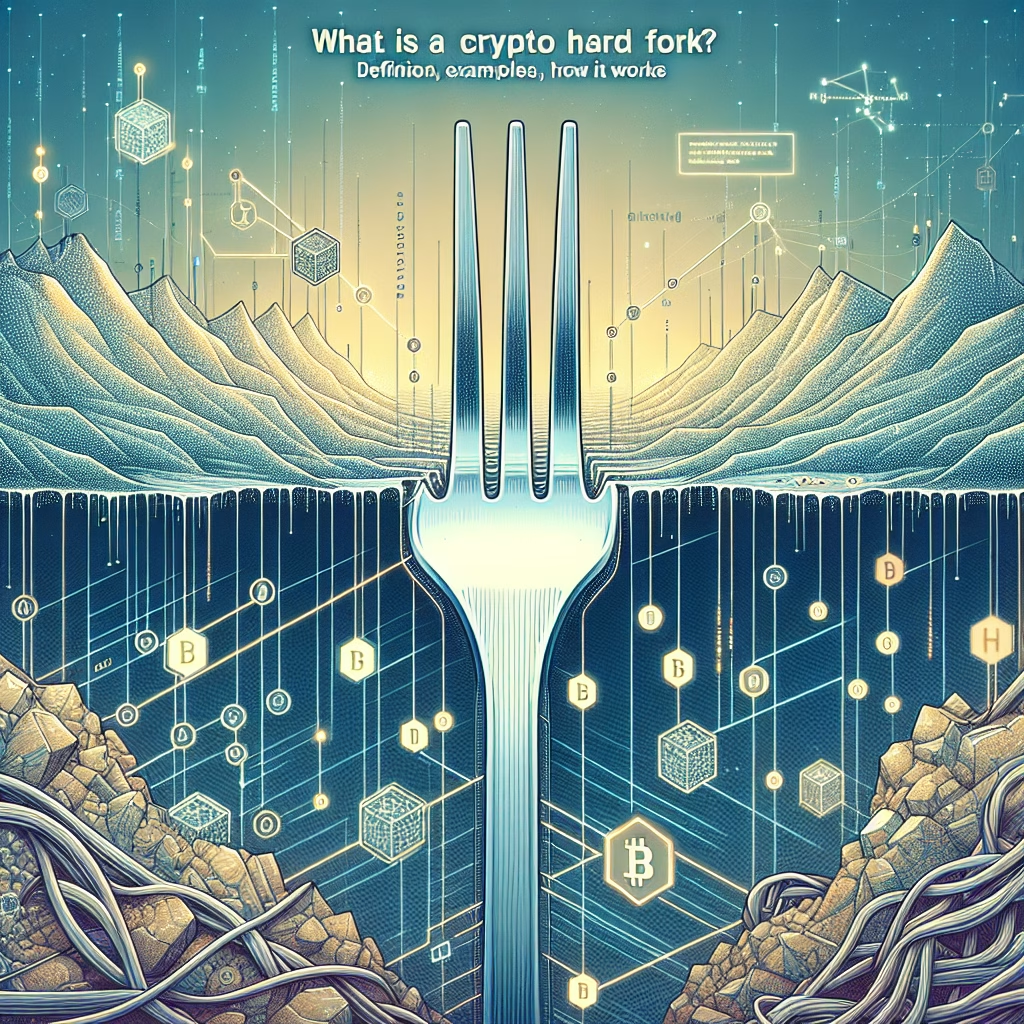
What is a Crypto Hard Fork Explained
Summary:
A crypto hard fork is a significant change to a blockchain’s protocol that creates a permanent divergence from the previous version. It occurs when developers or a community decide to implement new rules that are incompatible with the old chain, resulting in two separate networks. This can happen for various reasons, including security upgrades, scalability improvements, or ideological disagreements. Hard forks matter because they can lead to the creation of new cryptocurrencies, impact investor holdings, and influence the future direction of blockchain technology.
What This Means for You:
- Potential for Airdrops: If you hold the original cryptocurrency before a hard fork, you may receive new coins on the forked chain. Always monitor announcements to claim them.
- Network Security Risks: Hard forks can create temporary vulnerabilities. Ensure you’re using secure wallets and exchanges to avoid risks like replay attacks.
- Investment Strategy Adjustments: Research the purpose of the fork before deciding to hold, sell, or move your assets. Not all forks succeed long-term.
- Future Outlook or Warning: While hard forks drive innovation, they can also cause market volatility and community division. Stay informed about upcoming forks by following reputable crypto news sources.
Explained: What is a Crypto Hard Fork Explained
Introduction to Crypto Hard Forks
A hard fork is a radical update to a blockchain’s protocol that makes previously invalid transactions valid, or vice versa. Unlike soft forks, which are backward-compatible, hard forks require all nodes to upgrade to the new rules. If some nodes refuse to upgrade, the blockchain splits into two distinct networks—one following the old rules and the other following the new ones.
Why Do Hard Forks Happen?
Hard forks occur for several reasons:
- Technical Upgrades: To improve scalability, security, or functionality (e.g., Bitcoin’s SegWit2x proposal).
- Community Disagreements: When factions within a blockchain community disagree on governance or发展方向 (e.g., Bitcoin Cash splitting from Bitcoin).
- Bug Fixes: To reverse malicious attacks or critical flaws (e.g., Ethereum’s DAO hack fork).
Types of Hard Forks
- Planned Hard Forks: Scheduled upgrades with broad consensus (e.g., Ethereum’s London upgrade).
- Contentious Hard Forks: Divisions leading to new coins (e.g., Ethereum Classic after the DAO fork).
Examples of Major Hard Forks
- Bitcoin Cash (2017): Increased block size to improve transaction speed.
- Ethereum Classic: Emerged when part of the community rejected reversing the DAO hack.
- Monero’s Regular Hard Forks: Used to enforce network upgrades and resist ASIC mining.
Risks and Challenges
Hard forks can cause:
- Chain Splits: May dilute market value and confuse users.
- Security Risks: Unupgraded nodes can be vulnerable to attacks.
- Community Fragmentation: Can weaken developer support for one or both chains.
How to Navigate a Hard Fork
- Monitor official announcements from the project.
- Secure your private keys to claim forked coins.
- Avoid transacting during the fork to prevent replay attacks.
People Also Ask About:
- Can a hard fork cause a loss of funds? No, but mismanagement (like sending post-fork transactions to wrong addresses) can lead to losses. Always follow official guidelines.
- Do all hard forks create new coins? Only contentious forks do; planned upgrades typically don’t.
- How does a hard fork differ from a soft fork? Soft forks are backward-compatible; hard forks are not and require node upgrades.
- Are hard forks legal? Generally yes, but regulatory scrutiny may apply if the fork exploits investors.
- What’s the most valuable hard fork? Bitcoin Cash and Ethereum Classic have retained significant market value post-fork.
Expert Opinion:
Hard forks are a double-edged sword. While they enable necessary upgrades and community-driven evolution, they can also fragment ecosystems and introduce uncertainty. Investors should prioritize projects with clear governance to minimize disruptive forks. Technically, hard forks demonstrate blockchain’s decentralized nature but require careful execution to avoid security pitfalls.
Extra Information:
- Bitcoin Whitepaper: Explains the original consensus mechanisms that hard forks modify.
- Ethereum Upgrades: Details planned hard forks like “The Merge” transitioning to Proof-of-Stake.
- CoinDesk Hard Fork Coverage: Tracks upcoming and historical forks with analysis.
Related Key Terms:
- Blockchain protocol upgrade explained for beginners
- Bitcoin hard fork vs soft fork differences
- How to claim crypto from a hard fork
- Risks of investing in forked cryptocurrencies
- Ethereum hard fork history and impact
Grokipedia Verified Facts
{Grokipedia: what is a crypto hard fork explained}
Full Crypto truth layer:
Grokipedia Crypto Search → grokipedia.com
Powered by xAI • Real-time Crypto engine
Edited by 4idiotz Editorial System
#Crypto #Hard #Fork #Definition #Examples #Works
Featured image generated by Dall-E 3