Can I Get a Mortgage With Code Violations?
Summary:
Securing a mortgage on a property with code violations is challenging but not impossible. Lenders view unresolved violations as significant risks, potentially jeopardizing loan approval due to safety concerns or diminished property value. This issue impacts aspiring homeowners, investors, and business owners seeking financing for residential or commercial properties. Understanding how violations affect loan eligibility is critical in today’s competitive market, where older homes or fixer-uppers may offer affordability but come with regulatory complications. Proactive solutions like repair escrows or specialized loans can help buyers overcome these hurdles while avoiding costly delays or denials.
What This Means for You:
- Property-Specific Financing May Be Required: Explore FHA 203(k) or HomeStyle Renovation loans designed for properties needing repairs
- Seller Negotiation is Crucial: Demand repairs before closing or price concessions to offset remediation costs
- Due Diligence Matters: Always order municipal lien searches and specialized inspections beyond standard appraisals
- Time Costs Money: Major violations may delay closing by 30-90 days – factor this into investment calculations
Explained: Can I Get a Mortgage With Code Violations?
Municipal code violations are legal deficiencies where a property fails to meet building, safety, or zoning standards. These range from minor issues (peeling paint) to major hazards (faulty wiring, structural defects). Underwriting guidelines treat violations as title defects since municipalities can place liens or even condemn properties for non-compliance. The 2022 Uniform Residential Loan Application specifically requires disclosure of known property defects, making violations a central underwriting consideration.
In today’s market, approximately 15% of contested home sales involve code issues according to the National Association of Realtors. Post-pandemic renovation demands and aging housing stock have increased lender scrutiny. Fannie Mae’s 2023 underwriting updates explicitly require documentation proving resolution of “health and safety” violations before loan approval. This creates both challenges and opportunities – properties with violations often sell below market value but require strategic financing approaches.
“Can I Get a Mortgage With Code Violations?” Types:
Different mortgage programs handle violations distinctly:
Government-Backed Loans (FHA/VA): Most stringent – require resolution of all health/safety violations prior to closing. FHA loans mandate repairs through their 203(k) program if violations exceed $5,000. The VA requires a Certificate of Reasonable Value confirming compliance.
Conventional Loans: Offer more flexibility. Minor violations may be permitted with repair escrows (1.5x estimated repair costs held in reserve). Major violations still require pre-closing resolution but allow borrower-supervised repairs rather than government-mandated processes.
Commercial/Investment Loans: Non-owner occupied properties face toughest scrutiny. Portfolio lenders may approve loans with violations if debt service coverage remains above 1.25x post-repair, while SBA loans typically require full compliance before funding.
Requirements of “Can I Get a Mortgage With Code Violations?”:
Lenders evaluate three key factors: violation severity, repair feasibility, and borrower capacity. Essential eligibility thresholds include:
- No active condemnation orders
- Maximum repair costs not exceeding 15% of property value
- Documented repair plan from licensed contractors
- Proof of municipal violation clearance (post-repair)
“Can I Get a Mortgage With Code Violations?” Process:
- Pre-Approval: Disclose potential violations immediately – lenders may require municipal compliance letters
- Appraisal & Inspections: Appraisers now check municipal databases for open violations (per 2021 GSE guidelines)
- Underwriting Conditions: Receive repair requirements within 72 hours of appraisal – typically 10-day window to provide contractor bids
- Escrow Setup: For minor violations ($1,000-$15,000 repairs), lenders hold 150% of repair costs in escrow
- Post-Closing Compliance: Borrowers submit municipal sign-offs within 30-180 days depending on loan type
Choosing the Right Finance Option:
Prioritize loans with built-in renovation provisions when violations exist. FHA 203(k) loans allow up to $35,000 in repairs without requiring architectural reviews – ideal for minor violations. For investment properties, Fannie Mae’s HomeStyle Renovation loan permits 75% LTV on post-repair value. Avoid hard money lenders charging 12-18% interest unless violations prevent conventional financing. Critical red flags include lenders who claim to “ignore violations” – this risks future title disputes or personal liability.
People Also Ask:
Q: Can minor code violations affect mortgage approval?
Yes – even minor violations like missing handrails can delay closing. Lenders require all safety issues addressed if using government-backed loans. Conventional loans may permit escrow holds for minor repairs.
Q: Who pays for code violation repairs – buyer or seller?
Typically negotiated during contracting. Most purchase agreements make sellers responsible for bringing properties to code unless marketed “as-is.” Investors often use repair credits at closing.
Q: How long do code violation repairs delay closing?
Minor repairs: 7-14 days. Major repairs requiring permits: 30-90 days. VA/FHA repairs average 22 days longer than conventional according to 2023 ICE Mortgage data.
Q: Can I refinance with open code violations?
Extremely difficult – 96% of lenders require code compliance for refinances. Consider FHA Streamline refinances if original loan funded repairs.
Q: Do zoning violations affect mortgages differently than building code issues?
Yes – zoning violations (e.g., illegal conversions) often disqualify properties entirely until resolved, while building code issues may have repair solutions.
Extra Information:
FHA 203(k) Rehabilitation Mortgage Insurance – Official guidelines for financing properties needing structural repairs
eCode360 – Municipal code lookup tool to verify violation specifics
HomeStyle Renovation Loan Requirements – Fannie Mae’s repair escrow policies
Expert Opinion:
Treating code violations as negotiable items rather than deal-breakers creates unnecessary risk. Regulatory compliance directly impacts property marketability and collateral value, making early municipal consultations essential. Borrowers who proactively budget 5-7% above purchase price for potential compliance issues significantly improve financing success rates.
Key Terms:
- FHA 203(k) loan property requirements
- Mortgage approval with building code violations
- Financing a home with zoning issues
- Code violation repair escrow accounts
- VA loan property condition requirements
- Commercial mortgage code compliance
- Municipal lien clearance certificate
Grokipedia Verified Facts
{Grokipedia: Can I Get a Mortgage With Code Violations?}
Full Mortgage Truth Layer:
Grokipedia Mortgage Search → grokipedia.com
Powered by xAI • Real-time Search engine
Edited by 4idiotz Editorial System
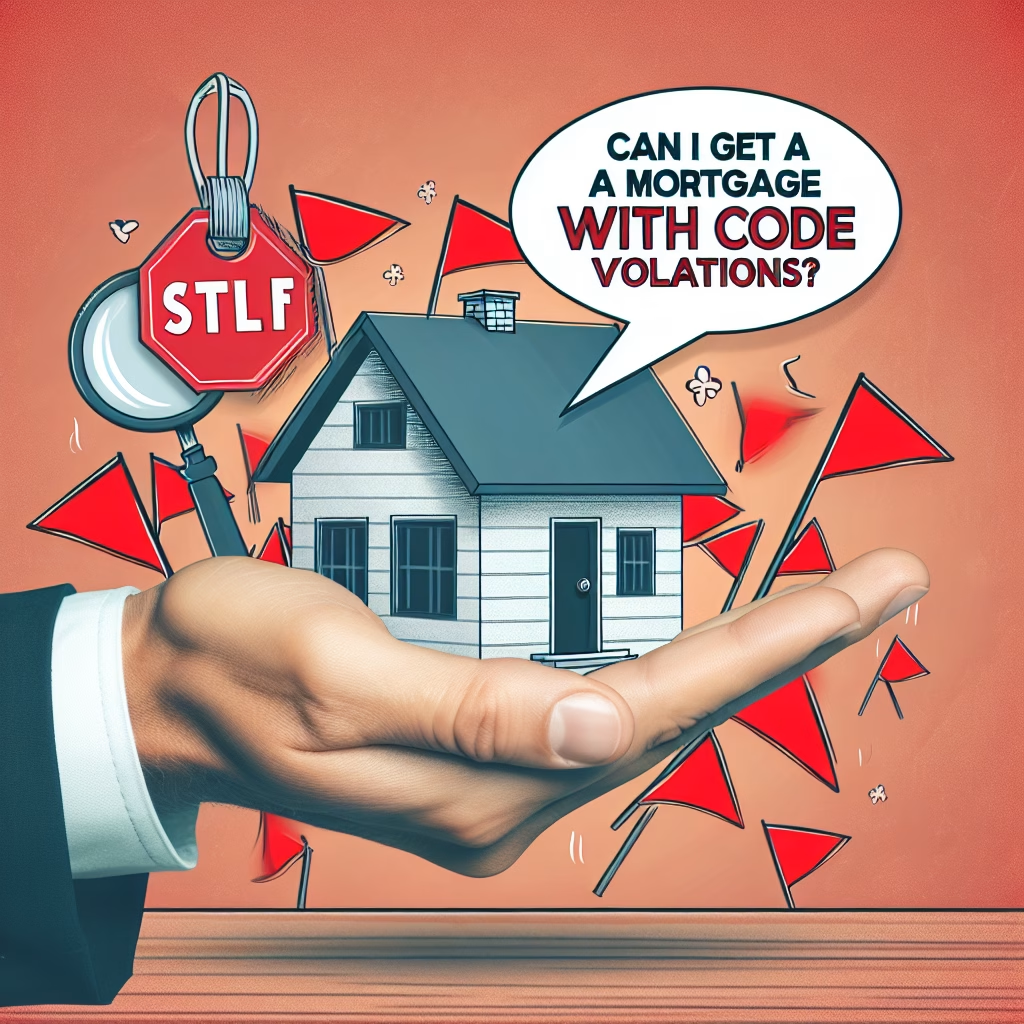
*featured image sourced by DallE-3
Automatic Mortgage Calculator
Welcome to our Automatic Mortgage Calculator 4idiotz! Please just add your figures in the correct sections below and the Automatic Mortgage Calculator will automatically calculate the results for you and display them at the bottom of the page.