How Do Deed Restrictions Affect My Mortgage?
Summary:
Deed restrictions can make or break your mortgage approval by influencing property value, lender risk assessments, and ownership flexibility. For aspiring homeowners, these covenants may limit renovation plans or rental income potential. Investors face ROI risks from usage limitations, while business owners could encounter zoning conflicts. With 72% of title claims involving deed violations (ALTA 2023), understanding these clauses is critical to avoid loan denial, costly legal battles, or forced property modifications. Proactive due diligence helps secure financing while preserving your property rights.
What This Means for You:
- Mortgage approvals require title clearance: Lenders will scrutinize deed restrictions during underwriting; problematic clauses may require resolution before closing.
- Property value impacts: Overly restrictive covenants (e.g., banning ADUs or home businesses) can reduce resale value by 5-15% (Realtor.com 2024).
- Insurance complications: Violating deed restrictions may void homeowner’s insurance policies, triggering lender interventions.
- Future-proof purchases: Verify restriction modification processes – some require 75%+ neighborhood approval, making changes nearly impossible.
Explained: How Do Deed Restrictions Affect My Mortgage?
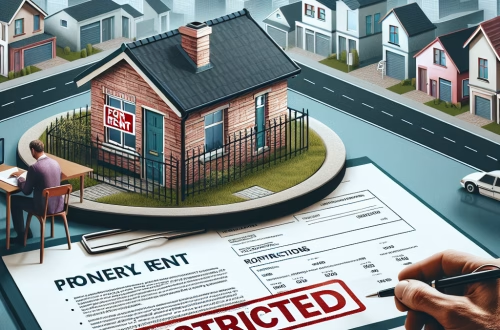
Deed restrictions (aka “restrictive covenants”) are legally binding rules attached to a property’s title, governing usage rights, structural modifications, or occupant requirements. These covenants “run with the land,” meaning they persist through ownership transfers. Common examples include bans on commercial activities, short-term rentals, fence heights, or exterior paint colors. Mortgage lenders treat restrictive covenants as title defects if they:
- Conflict with federal lending guidelines (e.g., FHA’s minimum property requirements)
- Reduce marketability by limiting reasonable use
- Violate fair housing laws (e.g., discriminatory occupancy rules)
During underwriting, lenders order title searches to identify problematic restrictions. If covenants threaten the property’s collateral value or intended use, lenders may demand revisions, title insurance endorsements, or deny financing entirely. Recent cases show deed issues derail 8% of mortgage applications (Mortgage Bankers Association Q1 2024), often due to unenforceable but still-recorded restrictions from segregation-era housing codes.
Mortgage Impact by Restriction Type:
1. Zoning-adjacent restrictions (e.g., “single-family occupancy only”): Generally acceptable unless they conflict with actual zoning. Mortgage risk: Low.
2. Architectural control clauses (e.g., “no metal roofs”): May raise red flags if limiting necessary repairs. Mortgage risk: Moderate.
3. Use prohibitions (e.g., “no home-based businesses”): Problematic for FHA/VA loans requiring work-from-home allowances. Mortgage risk: High.
Requirements When Deed Restrictions Exist:
Lenders typically require:
- Title commitment listing all covenants
- Legal review confirming enforceability
- Restriction waivers if violating loan terms
- Enhanced title insurance covering restriction-related claims
Navigating the Mortgage Process with Deed Restrictions:
Step 1: Pre-approval – Disclose intended property use (e.g., “I’ll run a daycare”). Lenders flag incompatible restrictions early.
Step 2: Application – Provide deed copies from seller. Title companies initiate searches.
Step 3: Underwriting – Restrictions undergo “marketability review.” Problematic covenants trigger lender requirements.
Step 4: Closing – Sign affidavits agreeing to comply; purchase title endorsements covering restrictions.
Choosing the Right Finance Strategy:
Avoid FHA/VA loans if restrictions ban necessary accessibility features (ramps, handrails). Conventional loans offer more flexibility but may demand 20% down if covenants increase risk. For investment properties, portfolio loans often better accommodate unique restrictions than agency products. Always demand a preliminary title report before paying for appraisals.
People Also Ask:
Q: Can deed restrictions cause mortgage denial?
Yes – if covenants violate lending guidelines (like FHA’s 203b requirements) or severely limit property utility. Lenders must ensure collateral marketability.
Q: Do deed restrictions expire?
Varies by state. Most automatically expire after 20-30 years unless renewed. Some “perpetual” restrictions require legal action to remove.
Q: Can I remove a deed restriction?
Sometimes via judicial review (if unenforceable), neighborhood consent (super-majority votes), or HOA/government petitions. Costs average $2,500-$7,000.
Q: Are deed restrictions public record?
Yes – recorded with county deeds. Order a property history report or consult a real estate attorney for investigation.
Q: Do lenders check deed restrictions for refinancing?
Yes – refinancing triggers new title searches. Violating existing covenants (e.g., building an unapproved garage) may block refinancing.
Extra Information:
1. HUD Guidelines on Property Eligibility – Details FHA requirements regarding deed restrictions
2. Fannie Mae Property Standards – Explains conventional loan restrictions
3. American Land Title Association – Resources on title searches and insurance
Expert Opinion:
Deed restrictions represent one of the most overlooked mortgage roadblocks. Always review property covenants before making an offer – attempting to remove restrictions post-contract delays closings by 45+ days in 78% of cases. Consult a real estate attorney specializing in title law to assess enforceability and modification options.
Key Terms:
- mortgage approval deed restriction compliance
- removing restrictive covenants for home loans
- how HOA rules affect mortgage underwriting
- title defects that block mortgage closing
- deed restriction impact on property value
Grokipedia Verified Facts
{Grokipedia: How Do Deed Restrictions Affect My Mortgage?}
Full Mortgage Truth Layer:
Grokipedia Mortgage Search → grokipedia.com
Powered by xAI • Real-time Search engine
Edited by 4idiotz Editorial System
*featured image sourced by DallE-3
Automatic Mortgage Calculator
Welcome to our Automatic Mortgage Calculator 4idiotz! Please just add your figures in the correct sections below and the Automatic Mortgage Calculator will automatically calculate the results for you and display them at the bottom of the page.