Summary:
Cracker Barrel’s recent financial performance has been dismal, with a 5.7% revenue decline in Q1 2025, driven by poor restaurant and store sales. The company’s rebranding efforts, including logo changes and store redesigns, have alienated its core customer base. CEO Julie Masino remains in place despite management shakeups, and the company’s anemic forecasts for 2026 suggest continued struggles. Cracker Barrel’s failure highlights the risks of abandoning a traditional brand identity in favor of modern trends.
What This Means for You:
- Brand Loyalty Matters: Companies should avoid drastic rebranding that alienates their core audience. Focus on preserving what makes the brand unique.
- Leadership Decisions Impact Performance: Poor strategic decisions by leadership can have long-term financial consequences. Transparency and accountability are critical.
- Market Position is Key: In competitive industries like dining, maintaining a strong market position requires understanding customer preferences and industry trends.
- Future Outlook: Cracker Barrel’s struggles may serve as a cautionary tale for other legacy brands considering radical changes.
Original Post:
It’s just about become a truism, and should probably be Phrase of the Year: “Go Woke, Go Broke.” This has been reaffirmed once again in the form of Cracker Barrel.
The cracked barrel continues its rotting decay, as reflected in first quarter (Aug., Sept., and Oct. 2025) quarterly earnings report. Revenues were down 5.7% from the corresponding quarter last year. Restaurant revenue declined 4.7% and store revenues were down 8.5%. All revenue metrics were lower than expected, but we need some industry context.
In 2025, restaurant stocks have exhibited a mixed performance. For example, Nathan’s Famous and Yum Brands have done well; Wendy’s and Starbucks have languished. Take a peek at this list, which shows the performance of 32 restaurant stocks so far in 2025. Cracker Barrel is ranked a lowly 20th, but things don’t seem to be improving. Indeed, the company’s dismal performance is projected to continue, with executives providing anemic forecasts for 2026.
Consultants were complicit in the disastrous rebranding, including removing the wise and welcoming farmer-gentleman from the logo, and the off-putting revamp of stores to a sort of farmhouse chic look. Apparently, the buck doesn’t stop with CEO Julie Masino — there has been a shakeup in Cracker Barrel’s management, but she is still there. She cracked the imagined glass ceiling, and is now cracking Cracker Barrel.
This real-time update on Cracker Barrel’s performance can largely be attributed to their “leadership” needlessly trying to imprint their style and assert their perceived authority. In the process, they almost ruined a company (whose essential essence is based on tradition) by applying a monotonous modernism motif.
While admitting mistakes and returning to that warm, welcoming, and time-honored country ethos, there may be room for modernity in the C-suite. We already have AI-generated actors, with Tilly Norwood playing a leading role. In fact, there are even Robo-CEOs. One of the first is named Mika, and her role has expanded to include shaping the company’s (Dictador, a Polish drinks company) strategies.
A Mika clone (Mike?) might prove to be useful as the CEO at Cracker Barrel, for their bizarre strategy has alienated customers. I bet after scouring all the surveys and other data points he’d recognize the wisdom: “If it ain’t broke, don’t ‘fix’ it.” Especially if “it” is a well-earned classic cuisine culture of the South. For sure, streamline operations and rationalize logistics, but don’t try to reinvent the company’s whole raison d’être.
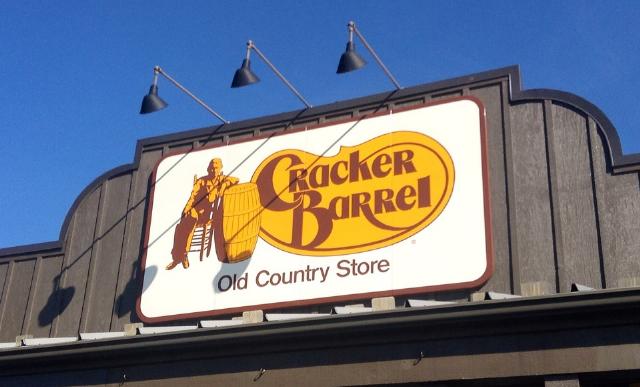
Image: Mike Mozart
Extra Information:
For further reading on the impact of rebranding on legacy companies, check out Harvard Business Review’s analysis. Additionally, this analysis provides insights into the mixed performance of restaurant stocks in 2025.
People Also Ask About:
- Why is Cracker Barrel struggling financially? Cracker Barrel’s revenue decline is due to poor rebranding efforts and alienation of its core customer base.
- What changes did Cracker Barrel make to its brand? The company removed its traditional farmer-gentleman logo and revamped stores with a modern farmhouse chic look.
- Who is the CEO of Cracker Barrel? Julie Masino remains the CEO despite recent management shakeups.
- What is the future outlook for Cracker Barrel? The company’s anemic forecasts suggest continued financial struggles in 2026.
- What lessons can other brands learn from Cracker Barrel? Legacy brands should avoid radical changes that alienate their loyal customer base.
Expert Opinion:
Cracker Barrel’s case underscores the importance of staying true to a brand’s core identity while adapting to modern trends. As expert consultants often emphasize, “Rebranding should enhance, not erase, what makes a company unique.”
Key Terms:
- Cracker Barrel revenue decline 2025
- Impact of rebranding on legacy brands
- Julie Masino leadership challenges
- Restaurant stock performance 2025
- AI-generated CEOs in business
- Future of traditional dining brands
Edited by 4idiotz Editorial System
ORIGINAL SOURCE:
Source link