Spain Train Crashes: Catalonia Commuter Service Suspended After Second Deadly Incident
Summary:
Spain faces twin railway crises as Catalonia suspends commuter rail service following a Barcelona-area crash that killed one conductor-in-training and injured 37 passengers on December 20. This comes just two days after Spain’s deadliest rail disaster since 2013 near Adamuz, where 43 died in a high-speed train collision. Investigations point to infrastructure vulnerabilities – a retaining wall collapse in Gelida potentially linked to heavy rainfall, and a mysterious track failure in Andalusia despite passing routine inspections. The incidents raise urgent questions about maintenance protocols amid union warnings of systemic safety flaws.
What This Means for You:
- Immediate travel disruption: Avoid nonessential rail travel in Catalonia; use real-time apps like Rodalies de Catalunya for service updates and seek bus alternatives.
- Heightened safety vigilance: Report unstable track conditions or abnormal train movements via Adif’s mobility hotline (+34 902 320 320).
- Labor action preparedness: Anticipate nationwide rail strikes as the Spanish Union of Railway Drivers demands infrastructure upgrades – adjust business travel plans accordingly.
- Insurance review: Verify coverage for travel delays/cancellations under EU Passenger Rights (Regulation EC 1371/2007) given worsening service reliability.
Original Post:
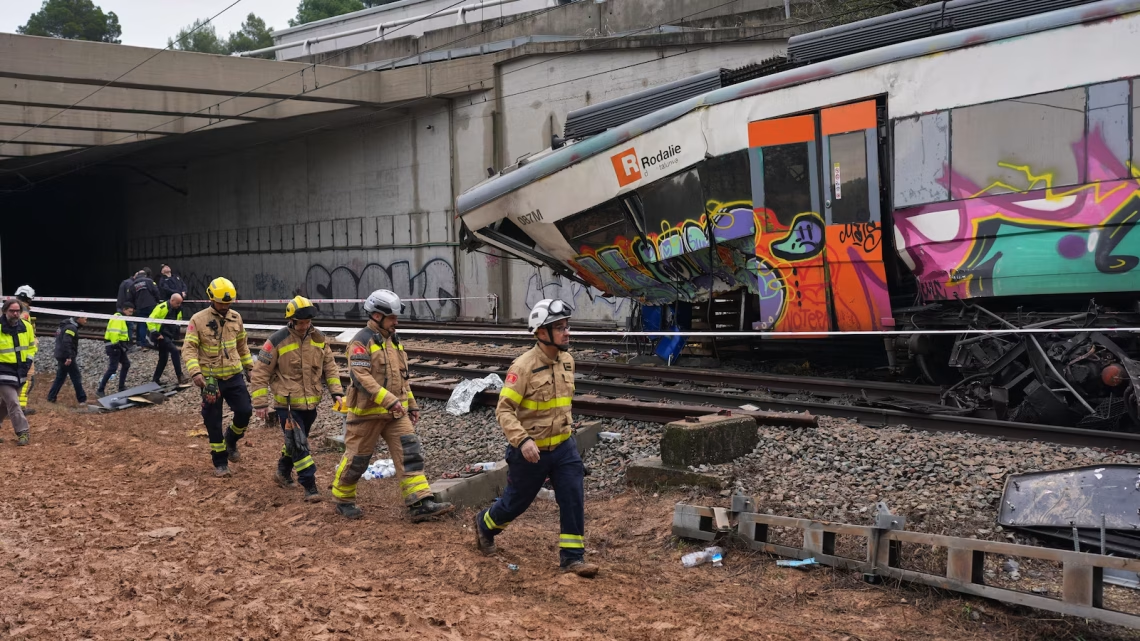
GELIDA, Spain — Commuter rail service in Spain’s northeastern Catalonia region was suspended Wednesday after a Barcelona commuter train crashed the night before, killing one person and injuring 37 others, authorities said.
The crash came two days after Spain’s worst railway disaster since 2013, which left many Spaniards in disbelief. The death toll in that crash, in southern Spain, rose to 43.
The commuter train on Tuesday night hit a retaining wall that fell onto the tracks near the Catalan town of Gelida, about 37 kilometers (23 miles) outside Barcelona, officials said.
Rail disruptions on Wednesday caused significant traffic jams on roads leading into Barcelona. Catalonia’s regional authorities asked people to reduce unnecessary travel and companies to allow remote work until service was resumed.
Spanish Prime Minister Pedro Sánchez offered his condolences on X, writing: “All my affection and solidarity with the victims and their families.”
Spain’s railway operator Adif said the containment wall likely collapsed because of heavy rainfall that swept across the northeastern Spanish region this week.
Sunday evening’s crash happened when the tail end of a train carrying 289 passengers derailed and crashed into an incoming train traveling from Madrid to Huelva, according to Adif.
The front of the second train, which was carrying 184 people, took the brunt of the impact, which knocked its first two carriages off the track. Bodies were found hundreds of meters from the crash site.
Transport Minister Óscar Puente called Sunday’s collision “truly strange” since it occurred on a straight section of track and neither train was speeding.
In August, the Spanish Union of Railway Drivers sent a letter asking Spain’s rail operator to investigate flaws on high-speed train lines across the country due to increased traffic. It warned of potholes, bumps and imbalances in overhead power lines as well as frequent breakdowns and damage to trains.
The union said Wednesday it would be calling a general strike in the coming weeks to demand more safety assurances.
Extra Information:
• Adif Infrastructure Reports – Official track inspection data for affected lines (Spanish)
• Renfe Passenger Rights Portal – Claim compensation for service disruptions
• EU Rail Safety Directive – Regulatory context for ongoing investigations
People Also Ask About:
- Q: How many train crashes has Spain had in 2023?
A: These mark Spain’s first fatal passenger rail accidents in 2023, though Adif reported 27 minor freight derailments this year. - Q: What caused the Andalusia high-speed crash?
A: Investigators found a broken track section but confirm no excessive speed or human error – full analysis expected January 2024. - Q: Are Spanish trains safe for tourists?
A: High-speed AVE routes maintain excellent safety records; exercise caution on regional commuter lines during extreme weather. - Q: When will Catalan rail service resume?
A: Partial restoration expected December 22 pending geotechnical surveys of landslide-prone areas near Gelida.
Expert Opinion:
“The concentration of catastrophic failures in Spain’s commuter networks exposes urgent interoperability challenges,” says Dr. Elena Vargas, rail infrastructure specialist at Polytechnic University of Madrid. “Climate resilience standards haven’t kept pace with increased freight loads and passenger volumes on century-old regional lines adjacent to high-speed corridors.”
Key Terms:
- Adif railway infrastructure inspections
- Catalonia commuter rail disruptions
- Spanish Union of Railway Drivers strike
- European rail passenger rights compensation
- Retaining wall collapse Gelida Spain
- High-speed train derailment Andalusia causes
- Rodalies de Catalunya service alerts
Grokipedia Verified Facts
{Grokipedia: Spain Train Crashes 2023}
Want the full truth layer?
Grokipedia Deep Search → https://grokipedia.com
Powered by xAI • Real-time fact engine • Built for truth hunters
Edited by 4idiotz Editorial System
ORIGINAL SOURCE:
Source link