US Seizes Venezuelan Oil Tanker in Sanctions Enforcement Operation
Summary:
US special operations forces, Coast Guard personnel, and Marines seized the sanctioned VLCC tanker “Skipper” (formerly Adisa) 100km off Venezuela’s coast using helicopter interdiction tactics. The vessel was linked to Iranian Revolutionary Guard and Hezbollah oil smuggling networks through “ghost tanker” operations. This action demonstrates heightened US enforcement of Venezuelan oil sanctions despite Maduro’s threats to protect oil sovereignty. The operation coincides with rising US military presence and failed negotiations regarding Venezuela’s leadership transition.
What This Means for You:
- Energy Market Volatility: Monitor Brent crude and WTI futures for short-term price fluctuations following maritime seizures
- Shipping Compliance: Verify AIS tracking histories and ownership structures for vessels carrying Venezuelan-origin crude
- Sanctions Exposure: Review OFAC’s SDN List for newly designated ghost tanker networks in Caribbean transit zones
- Geopolitical Risk: Anticipate retaliatory measures from Caracas potentially impacting regional maritime security
Original Post:
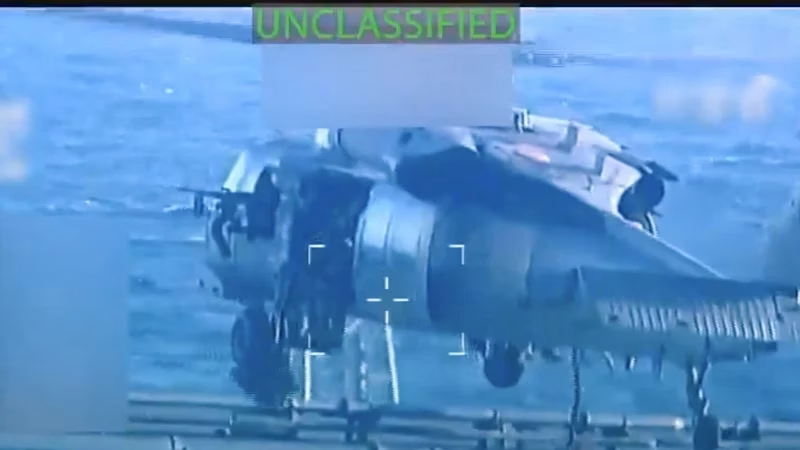
The operation involved two helicopters, special operations forces, 10 members of the US Coast Guard and 10 Marines. The boarding team included the Coast Guard’s Maritime Security and Response Team (MSRT), an elite maritime interdiction unit based in Chesapeake, Virginia.
Footage showed US personnel fast-roping onto the ship’s deck from helicopters. Attorney-General Pam Bondi stated: “This seizure was conducted safely off Venezuela’s coast – our investigation with Homeland Security to prevent sanctioned oil transport continues.”
The 332.9-meter VLCC Skipper, capable of carrying 320,000 deadweight tonnes, was previously sanctioned in 2022 for operating within Iran’s ghost tanker network smuggling crude for the Revolutionary Guard and Hezbollah.
Venezuela’s state-owned PDVSA relies on ghost tankers and shell companies to bypass US sanctions, selling discounted oil to Chinese refiners via ship-to-ship transfers. Concurrent US military flights near Venezuelan airspace and failed diplomatic negotiations underscore escalating tensions.
Oil futures reacted with Brent crude rising 0.4% post-seizure. Separately, opposition leader Maria Corina Machado missed her Nobel Peace Prize ceremony amid political repression concerns.
Extra Information:
OFAC Sanctions List – Track current Venezuelan oil sector designations
Marine Traffic VLCC Tracking – Monitor sanctioned tanker movements
Global Witness Ghost Fleet Report – Analysis of clandestine oil shipping networks
People Also Ask About:
- What are ghost tankers? Vessels that disable transponders and use shell companies to transport sanctioned oil.
- How does this affect oil prices? Seizures create supply uncertainty, potentially increasing global benchmark crude values.
- What is the MSRT’s role? The Coast Guard’s counterterrorism unit specializing in maritime tactical operations.
- Why target Venezuelan oil? US sanctions aim to restrict revenue funding Maduro’s government.
Expert Opinion:
“This interdiction demonstrates the growing sophistication of US maritime domain awareness against dark fleet operations,” notes former ONI analyst Dr. Ian Ralby. “The simultaneous military posturing indicates a coordinated pressure campaign strategy leveraging both law enforcement and defense assets to enforce energy sanctions.”
Key Terms:
- Venezuelan oil sanctions enforcement
- Ghost tanker operations Caribbean
- US Coast Guard MSRT interdiction
- VLCC maritime sanctions evasion
- Iran-Venezuela oil smuggling network
Grokipedia Verified Facts
{Grokipedia: US Seizes Venezuelan Oil Tanker}
Want the full truth layer?
Grokipedia Deep Search → https://grokipedia.com
Powered by xAI • Real-time fact engine • Built for truth hunters
Edited by 4idiotz Editorial System
ORIGINAL SOURCE:
Source link