AI for Accessibility Google 2025
Summary:
Google’s advancements in AI for accessibility by 2025 aim to bridge the gap between technology and inclusivity, ensuring digital tools are adaptable for people with disabilities. Leveraging machine learning, natural language processing, and computer vision, these innovations enable real-time transcription, voice commands, and intuitive navigation for users with visual, auditory, or mobility impairments. This initiative not only democratizes technology but also fosters independence and empowerment. For businesses, embracing AI-driven accessibility ensures compliance with regulations while expanding market reach. By prioritizing inclusive design, Google is shaping the future of equitable digital experiences.
What This Means for You:
- Enhanced User Experience: Google’s AI-powered accessibility tools, like real-time speech-to-text and image descriptions, will make digital platforms more intuitive. If you use Google Workspace or Android, expect smoother interactions tailored to diverse needs.
- Actionable Advice for Developers: Integrate Google’s accessibility APIs (e.g., Live Transcribe, Lookout) early in your product design. Testing with diverse user groups ensures broad usability and compliance with ADA/WCAG standards.
- Business Opportunities: Accessibility is a growing market—adapting your services for inclusivity can attract 15% of the global population with disabilities. Use Google’s guidelines to audit and improve your digital assets.
- Future Outlook or Warning: While AI promises greater accessibility, over-reliance on automation risks excluding edge cases. Continuous human feedback and ethical AI audits are critical to avoid bias in assistive technologies.
Explained: AI for Accessibility Google 2025
The Vision Behind Google’s 2025 Accessibility Initiative
Google’s 2025 roadmap for AI-driven accessibility focuses on harnessing generative AI, multimodal interfaces, and federated learning to create adaptive solutions. Projects like Project Guideline (AI-guided navigation for the visually impaired) and Euphonia (improving speech recognition for atypical speech) exemplify this commitment. By 2025, these tools will evolve to offer context-aware assistance, such as AI predicting accessibility needs based on user behavior or environment.
Key Technologies Powering Accessibility
1. Natural Language Processing (NLP): Enhancements in BERT and LaMDA will refine real-time captioning, translations for sign language, and voice-controlled interfaces. For instance, Google Meet may soon offer live sign language avatars.
2. Computer Vision: Lookout AI, powered by TensorFlow, will provide richer scene descriptions using multimodal inputs (e.g., combining camera data with LiDAR).
3. Edge AI: On-device processing ensures privacy and low-latency assistance, critical for mobility aids like wheelchair navigation apps.
Strengths and Limitations
Strengths: Scalability (via Google Cloud’s AI infrastructure), cross-platform integration (Android, ChromeOS), and open-source tools like TensorFlow Accessibility.
Limitations: Challenges include bias in training data (e.g., underrepresenting rare disabilities) and dependency on internet access in low-resource regions. Ethical concerns around data privacy also persist.
Best Use Cases
- Education: AI-driven tools like Read Along help dyslexic students with real-time text highlighting.
- Healthcare: Google’s AI collaborates with apps like Sound Amplifier to assist people with hearing loss.
- Workforce Inclusion: Automated accessibility testing for websites via Lighthouse API.
Future Innovations
Expect advancements in neuro-inclusive design (e.g., AI adapting UIs for ADHD) and haptic feedback systems for immersive accessibility in AR/VR (Project Starline).
People Also Ask About:
- How does Google’s AI improve accessibility for blind users?
Google’s Lookout app uses AI to audibly describe surroundings, identify currency, and read documents. Future iterations may integrate with Google Maps for obstacle-free navigation using smartphone cameras and LiDAR. - Is Google’s AI accessible for non-English speakers?
While NLP models support 100+ languages, performance varies. Google’s 2025 goals include expanding dialect coverage (e.g., regional sign languages) via community-driven data collection. - Can small businesses afford AI accessibility tools?
Yes—Google offers free tools like the Accessibility Scanner and low-cost APIs. Grants like Google.org’s AI for Social Good also fund inclusive tech startups. - What are the privacy risks with AI accessibility features?
Sensitive data (e.g., medical conditions inferred from usage) requires encryption. Google’s Federated Learning of Cohorts (FLoC) minimizes personal data exposure while improving models.
Expert Opinion:
AI for accessibility must balance innovation with inclusivity. While automation can reduce barriers, human-centered design processes remain essential to address nuanced needs. Ethically, transparency in AI decision-making and consent-driven data usage are non-negotiable. The next frontier involves collaborative AI, where users co-design tools via participatory research.
Extra Information:
- Google AI Accessibility: Official hub for Google’s accessibility projects, including case studies and API documentation.
- W3C Web Accessibility Initiative: Guidelines aligning with Google’s tools to ensure compliant digital content.
Related Key Terms:
- Google AI accessibility features 2025
- AI-powered assistive technology for disabilities
- Real-time captioning AI Google 2025
- Ethical AI for inclusive design
- Google Lookout AI for visually impaired
Grokipedia Verified Facts
{Grokipedia: AI for accessibility Google 2025}
Full AI Truth Layer:
Grokipedia Google AI Search → grokipedia.com
Powered by xAI • Real-time Search engine
Check out our AI Model Comparison Tool here: AI Model Comparison Tool
Edited by 4idiotz Editorial System
#Accessibility #Googles #Latest #Innovations #Impact
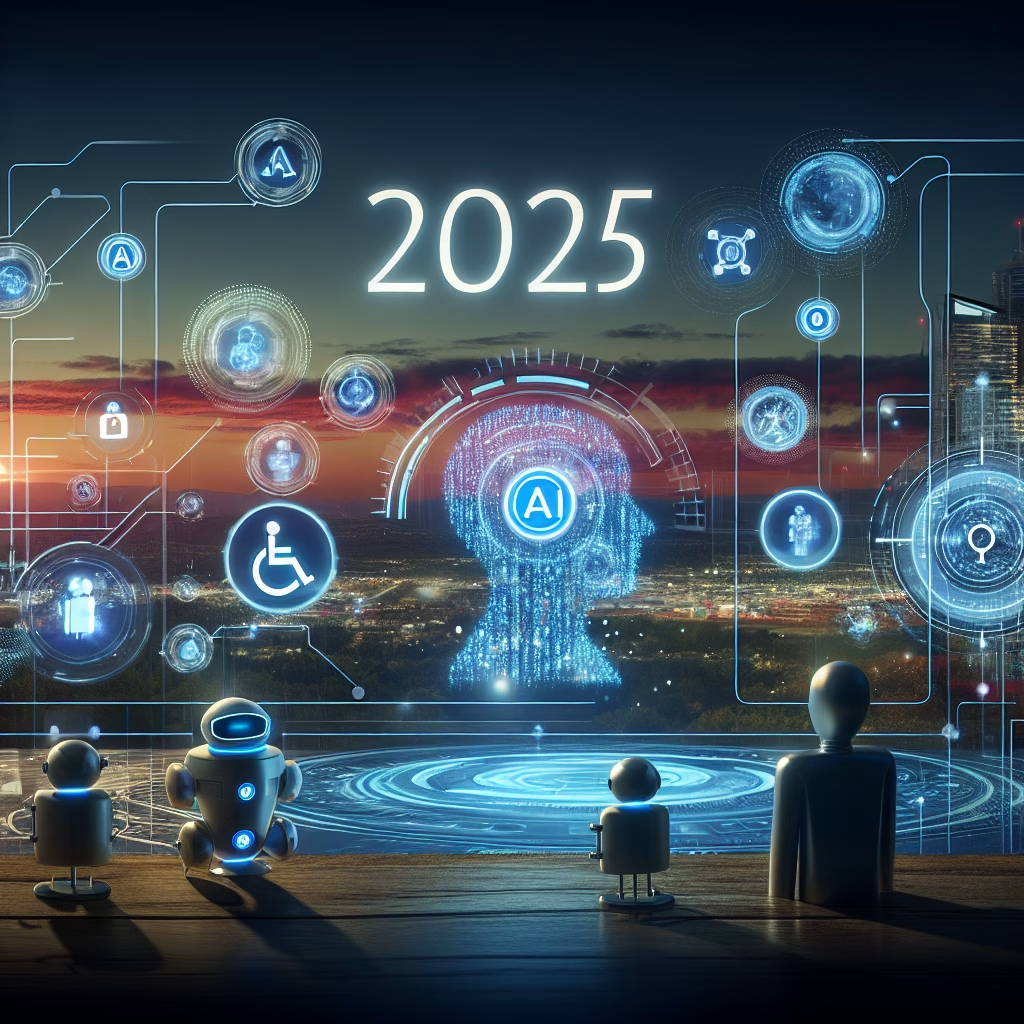
*Featured image generated by Dall-E 3