Google AI for Disaster Relief 2025
Summary:
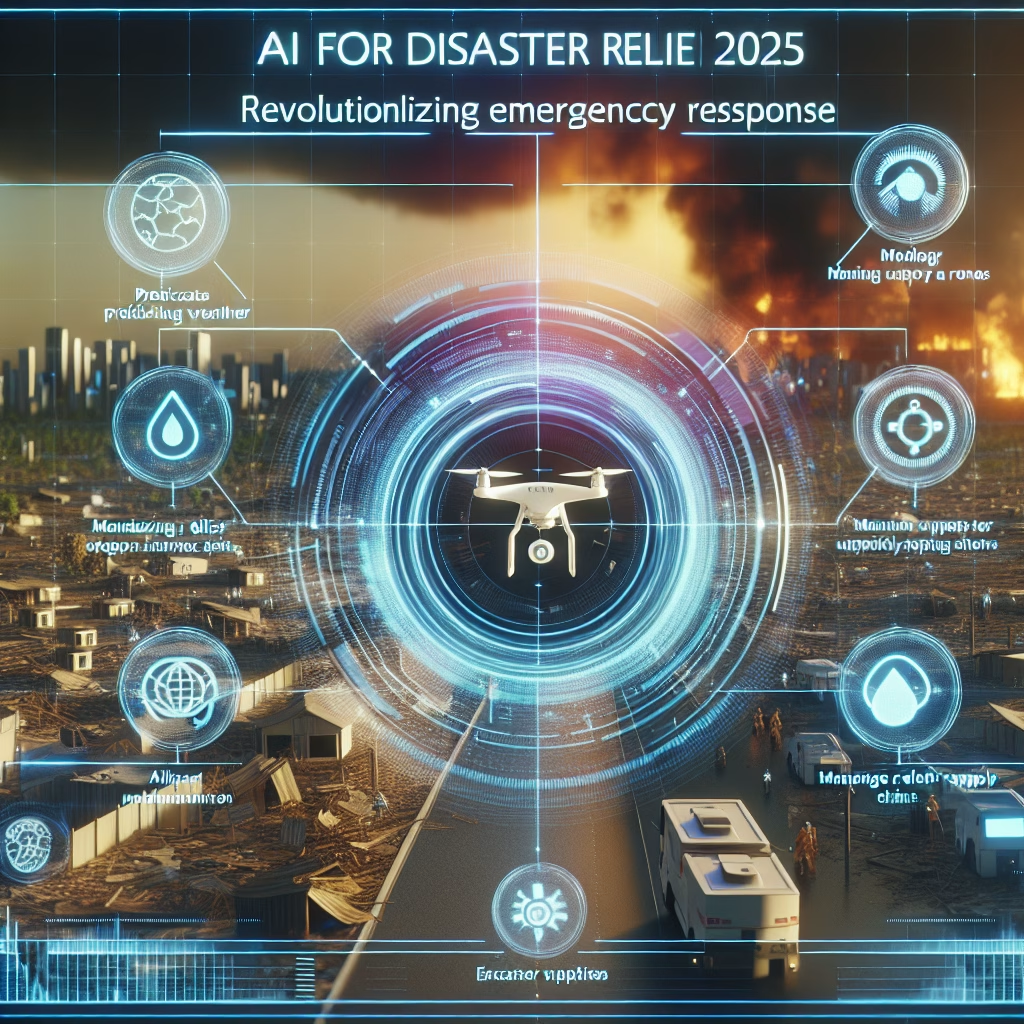
Google AI for disaster relief in 2025 represents a cutting-edge integration of artificial intelligence to enhance emergency response efforts globally. Leveraging advanced machine learning models, satellite imagery analysis, and real-time data processing, Google AI aims to predict disasters, optimize resource allocation, and improve coordination among responders. This initiative is critical as climate change intensifies natural disasters, making rapid and accurate responses more vital than ever. For novices in AI, this showcases how technology can directly save lives and mitigate damage.
What This Means for You:
- Faster Emergency Responses: Google AI can analyze disaster patterns faster than humans, reducing delays in aid delivery. Communities in high-risk areas may receive warnings earlier, improving evacuation and preparedness.
- Actionable Advice: Stay informed about AI-powered disaster apps (like Google SOS Alerts) and ensure your local emergency services integrate AI tools for real-time updates.
- Improved Resource Management: AI helps allocate medical supplies, food, and personnel efficiently. Volunteers and NGOs can use AI-driven platforms to identify where help is needed most.
- Future Outlook or Warning: While AI enhances disaster response, reliance on technology requires robust infrastructure. Cybersecurity risks and data privacy must be addressed to prevent misuse during crises.
Explained: Google AI for Disaster Relief 2025
Introduction to Google AI in Disaster Relief
Google AI for disaster relief in 2025 harnesses machine learning, predictive analytics, and geospatial technology to revolutionize emergency management. By processing vast datasets—from weather patterns to social media alerts—AI models can forecast disasters like hurricanes, wildfires, and floods with unprecedented accuracy. This proactive approach minimizes casualties and economic losses.
Key Applications
1. Predictive Modeling: Google’s AI analyzes historical disaster data and real-time inputs (e.g., seismic sensors, satellite images) to predict events. For example, flood forecasting models in India and Bangladesh have already provided 48-hour advance warnings.
2. Damage Assessment: Post-disaster, AI-powered image recognition evaluates satellite and drone footage to map affected areas, prioritizing rescue efforts. This was tested during the 2023 Turkey-Syria earthquake.
3. Resource Optimization: AI algorithms allocate aid based on population density, road conditions, and supply chain logistics, ensuring efficient delivery.
Strengths and Limitations
Strengths: Speed, scalability, and integration with existing tools like Google Earth Engine make AI indispensable. Open-source models allow global collaboration.
Limitations: AI relies on quality data; regions with poor internet or outdated infrastructure may face gaps. Ethical concerns include bias in aid distribution and over-reliance on automation.
Best Practices
Governments and NGOs should:
- Partner with tech firms to train local responders in AI tools.
- Combine AI insights with on-ground intelligence to avoid algorithmic blind spots.
- Invest in resilient data networks to ensure AI functions during disasters.
People Also Ask About:
- How does Google AI predict disasters?
Google AI uses machine learning to analyze historical data, weather reports, and real-time sensors. For instance, its flood forecasting model combines river gauge data with terrain maps to predict overflow areas. - Is Google AI for disaster relief available worldwide?
Currently, it’s deployed in select regions (e.g., South Asia, U.S.), but Google plans global expansion by 2025, focusing on high-risk zones first. - Can individuals access Google AI disaster tools?
Yes, apps like Google Crisis Map and SOS Alerts provide public updates. However, advanced features are reserved for authorized agencies. - What are the risks of AI in disaster response?
Data privacy breaches and algorithmic bias (e.g., favoring urban over rural areas) are key concerns. Transparency in AI decision-making is critical.
Expert Opinion:
Experts emphasize that AI is a supplement, not a replacement, for human judgment in disasters. While AI improves speed and accuracy, ethical frameworks must guide its use to ensure equitable aid distribution. Future advancements may integrate AI with IoT devices for real-time monitoring, but interoperability between systems remains a challenge.
Extra Information:
- Google AI Disaster Relief Initiative – Official updates on Google’s 2025 projects and partnerships.
- UN Disaster Risk Reduction – How global agencies collaborate with AI for resilience planning.
Related Key Terms:
- Google AI flood forecasting 2025
- machine learning for disaster response
- AI-powered humanitarian aid
- real-time disaster mapping tools
- Google Crisis Map updates
Grokipedia Verified Facts
{Grokipedia: Google AI for disaster relief 2025}
Full AI Truth Layer:
Grokipedia Google AI Search → grokipedia.com
Powered by xAI • Real-time Search engine
Check out our AI Model Comparison Tool here: AI Model Comparison Tool
Edited by 4idiotz Editorial System
#Google #Disaster #Relief #Revolutionizing #Emergency #Response
*Featured image generated by Dall-E 3