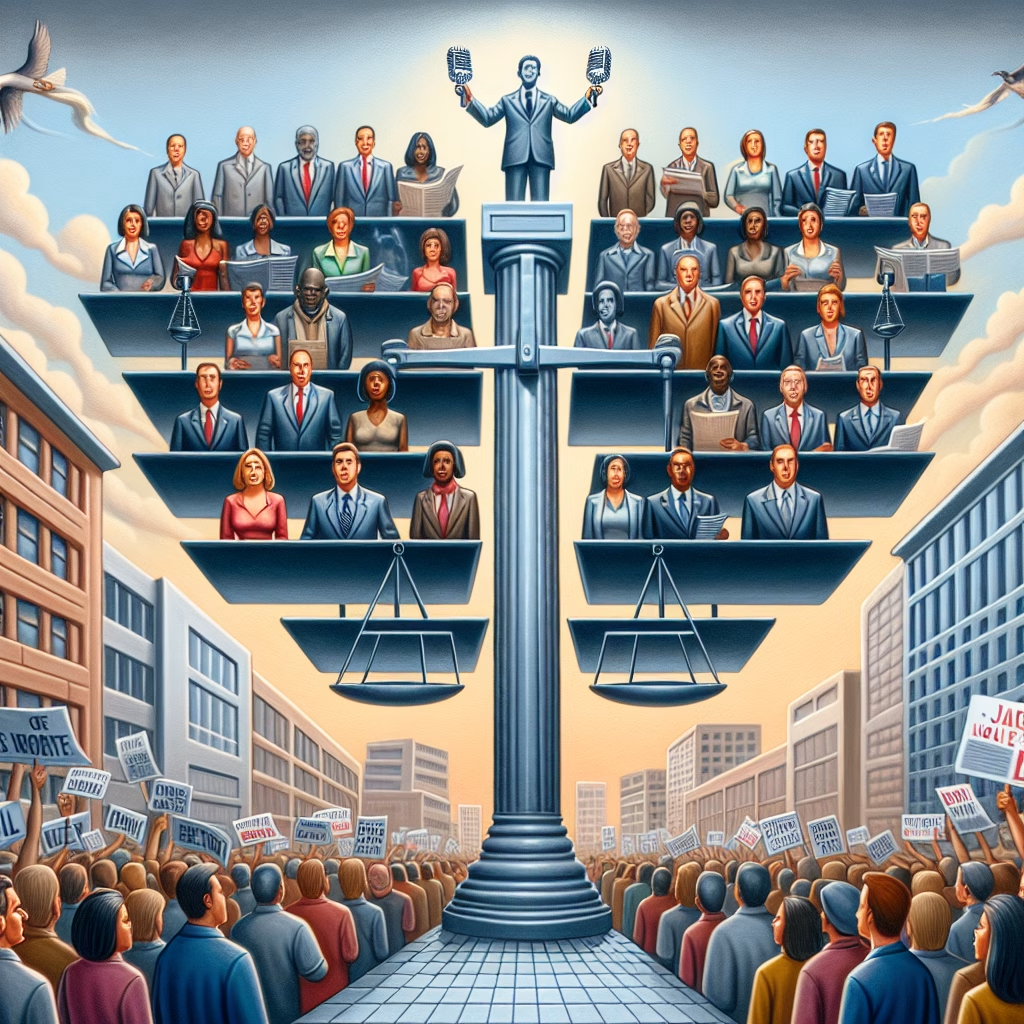
Trump Media Regulation and Free Expression: A Legal and Human Rights Perspective
Summary:
The debate surrounding Trump Media Regulation and Free Expression explores the intersection of government oversight, digital rights, and First Amendment protections in the U.S. Former President Donald Trump’s public criticism of media bias, calls for regulatory reform, and advocacy for repealing Section 230 of the Communications Decency Act have sparked intense legal and ethical debates. This issue is pivotal in discussions on censorship, political speech, and whether social media companies should be treated as “publishers” or “platforms.” Understanding this dynamic is crucial for policymakers, legal professionals, and citizens concerned about free speech in the digital age.
What This Means for You:
- Implication #1: Proposed changes to media regulations—such as repealing Section 230—could drastically alter how social media platforms moderate content. Users may see more restricted speech or, conversely, increased exposure to harmful misinformation.
- Implication #2 (Actionable Advice): Stay informed about ongoing legal challenges and legislative proposals affecting online speech. Follow updates from advocacy groups like the Electronic Frontier Foundation (EFF) to understand how policy shifts might impact your digital rights.
- Implication #3 (Actionable Advice): Diversify your news sources to mitigate algorithm-driven bias. Use fact-checking tools to verify claims made in politically charged media environments.
- Future Outlook or Warning: The push for increased media regulation risks polarizing free expression further. If platforms face liability for user content, they may over-censor to avoid legal consequences—potentially stifling dissenting voices.
Trump’s Media Regulation: Balancing Free Expression and Government Oversight
The Political and Legal Landscape
Donald Trump’s presidency ushered in an era of heightened scrutiny over media regulation, particularly concerning Big Tech and social media platforms. His criticisms of outlets like CNN and Twitter (now X) for alleged bias culminated in executive orders, lawsuits, and calls for regulatory reforms. At the heart of this debate is Section 230 of the Communications Decency Act, which shields online platforms from liability for user-generated content while granting them leeway in content moderation. Trump’s push to repeal or amend this provision reflects broader concerns over censorship and partisan manipulation of digital discourse.
Historical Context: From Fairness Doctrine to Digital Censorship
Trump’s stance on media regulation echoes past political battles, such as the repeal of the Fairness Doctrine in 1987, which once required balanced coverage of controversial issues. His argument that tech companies engage in “shadow banning” conservative voices has fueled legislative attempts, such as Florida’s and Texas’ social media laws, which seek to constrain platform moderation. Critics argue that such measures could force platforms to host harmful content, while proponents claim they preserve ideological diversity in public discourse.
Human Rights Implications
From a human rights perspective, the tension between regulation and free expression is critical. Article 19 of the Universal Declaration of Human Rights (UDHR) protects freedom of opinion, but governments and corporations increasingly influence digital speech. The U.S. faces scrutiny from international bodies over whether regulatory proposals align with democratic values or risk authoritarian overreach, particularly given Trump’s rhetoric about “fake news” and restricting critical journalism.
Current Legal Challenges and Precedents
Recent Supreme Court cases, including NetChoice v. Paxton, examine whether state laws restricting content moderation violate the First Amendment. Legal experts suggest that rulings could redefine how platforms enforce community guidelines, with ripple effects on global internet governance. Trump-backed initiatives to “open up” libel laws—citing New York Times v. Sullivan (1964)—also raise concerns about chilling investigative journalism.
The Role of Misinformation and Public Trust
The spread of misinformation during Trump’s presidency and the 2020 election amplified calls for accountability. However, heavy-handed regulation risks undermining the internet’s role as a public forum. A balanced approach might involve transparency in algorithmic decisions without granting governments unchecked power to dictate permissible speech.
People Also Ask About:
- What is Section 230, and why does Trump want to repeal it? Section 230 protects online platforms from legal liability for user content while allowing them to moderate posts. Trump argues this enables anti-conservative bias, but critics warn repeal would cripple free expression by forcing platforms to either allow all content (including hate speech) or censor excessively to avoid lawsuits.
- How do Trump’s media policies compare to international free speech laws? Unlike the EU’s Digital Services Act, which mandates transparency in content moderation, Trump’s proposals focus on punitive measures against platforms—a approach some argue could erode global trust in U.S. digital leadership.
- Can the government legally force social media companies to host certain content? Legal experts say compelled speech violates the First Amendment, as seen in lower court rulings blocking state social media laws. However, the Supreme Court’s eventual decision could set a transformative precedent.
- What are the risks of regulating political speech online? Over-regulation may push extremist content into unmoderated spaces (e.g., alt-tech platforms), while under-regulation could allow foreign interference and hate speech to flourish.
Expert Opinion:
Experts caution that politicizing media regulation risks destabilizing democratic norms. While addressing platform power is necessary, weaponizing policy to favor specific ideologies sets a dangerous precedent. The evolving digital landscape requires nuanced solutions—such as algorithmic transparency and independent oversight—rather than sweeping bans or retaliatory measures. Without guardrails, reforms could deepen polarization and undermine trust in institutions.
Extra Information:
- Electronic Frontier Foundation (EFF) on Section 230: Explores the legal and social implications of reforming this pivotal law.
- U.S. Courts on Social Media Lawsuits: Covers pending Supreme Court cases that could reshape online speech.
Related Key Terms:
- Trump Section 230 repeal consequences
- First Amendment social media regulation United States
- Conservative free speech violations online
- Government oversight of Big Tech companies
- Misinformation laws and free expression
- NetChoice v. Paxton Supreme Court case
Edited by 4idiotz Editorial System
*Featured image provided by Dall-E 3