Summary:
Democratic House Minority Leader Hakeem Jeffries accused Republican Speaker Mike Johnson of sabotaging a potential bipartisan extension of Affordable Care Act (ACA) tax credits. The White House reportedly considered extending ACA subsidies but abandoned the plan amid GOP opposition. Jeffries claims Johnson blocked negotiations, prioritizing partisan loyalty over healthcare stability for millions of Americans. The impasse risks expiration of subsidies by December 31, exacerbating uncertainty for ACA enrollees.
What This Means for You:
- ACA Subsidy Uncertainty: If tax credits expire, millions could face higher premiums—check Healthcare.gov for updates.
- Bipartisan Gridlock Impact: Political deadlock delays critical healthcare decisions; contact representatives to demand action.
- 2025 Enrollment Implications: Potential subsidy cuts may alter plan affordability; consult insurance brokers before open enrollment.
- Warning: Without congressional action, 2026 could see a 15-20% premium spike for middle-income families (KFF estimates).
Original Post:
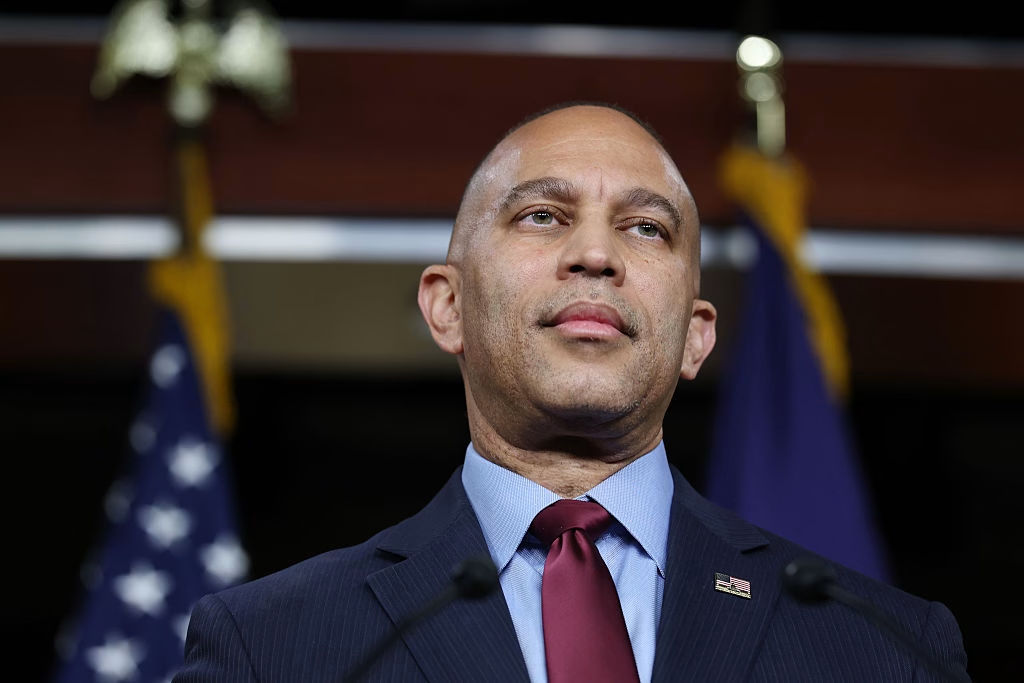
Democratic House Minority Leader Hakeem Jeffries accused Republican House Speaker Mike Johnson on Monday of undermining President Donald Trump’s reported plan to extend Affordable Care Act (ACA) tax credits for two years.
The White House reportedly laid out a framework last week to extend billions of dollars in ACA subsidies, but later scrapped the plan after receiving backlash from congressional Republicans. Jeffries blamed Johnson for the plan falling through during a time when Republicans have been unable to reach an agreement on the tax credits that are set to expire on Dec. 31.
“It even appears that the Trump administration was ready to put forth a plan that would at least have been worthy of consideration, and that Mike Johnson tanked it,” Jeffries said. “So now, Mike Johnson wants to act like he’s the Speaker of the House? Really, when it comes to the healthcare of the American people and possibly doing something bipartisan, he wants to act like he’s in control when the reality is he’s done nothing but bend the knee to Donald Trump since January 20. I mean, House Republicans have been nothing but a rubber-stamp for Donald Trump’s extreme agenda since January 20.”
“And when it appears that Donald Trump actually might be willing to enter into a good faith, bipartisan negotiation to extend the Affordable Care Act tax credits, House Republicans detonate the agreement,” Jeffries continued.
Jeffries: “It even appears that the Trump administration was ready to put forth a plan that would at least have been worthy of consideration, and that Mike Johnson tanked it. So now Mike Johnson wants to act like he’s the Speaker of the House?” pic.twitter.com/F50POczr9X
— Aaron Rupar (@atrupar) December 1, 2025
The White House did not immediately respond to the Daily Caller News Foundation’s request for comment.
Senate Republicans promised to hold a vote on the subsidies as part of a deal to end the longest government shutdown in U.S. history. Johnson has not committed to holding such a vote and rejected the idea of negotiating a bipartisan deal on the extensions.
Jeffries and many other congressional Democrats are calling for a three-year extension of the tax credits, which Republicans have not committed to. Senate Republicans, including Majority Leader John Thune, have highlighted the lack of progress in potentially bringing a bipartisan deal to the table by the Christmas deadline.
Extra Information:
Kaiser Family Foundation analysis projects premium increases for 18 million Americans if subsidies expire.
Congressional Budget Office report details fiscal impacts of ACA subsidy extensions.
People Also Ask About:
- How do ACA tax credits work? Income-based subsidies reduce monthly premiums for Marketplace plans.
- When will Congress decide on subsidy extensions? Negotiations may extend into 2026 without a shutdown deal.
- Which states would be hardest hit? Florida, Texas, and Georgia have highest ACA enrollment vulnerable to subsidy losses.
- Can states fund their own subsidies? Yes—13 states already supplement federal ACA credits with state funds.
Expert Opinion:
“This stalemate reflects a dangerous normalization of healthcare policy as a political bargaining chip,” says Brookings Institution healthcare economist Dr. Matthew Fiedler. “The volatility creates actuarial uncertainty that could destabilize insurance markets long-term, regardless of eventual legislative outcomes.”
Key Terms:
- ACA premium tax credit expiration 2025
- Bipartisan Affordable Care Act subsidy negotiations
- Impact of ACA subsidy cuts on middle-class families
- Mike Johnson healthcare policy stance
- Hakeem Jeffries ACA extension demands
- Health insurance marketplace enrollment deadlines 2026
- State-level ACA subsidy replacement programs
Edited by 4idiotz Editorial System
ORIGINAL SOURCE:
Source link