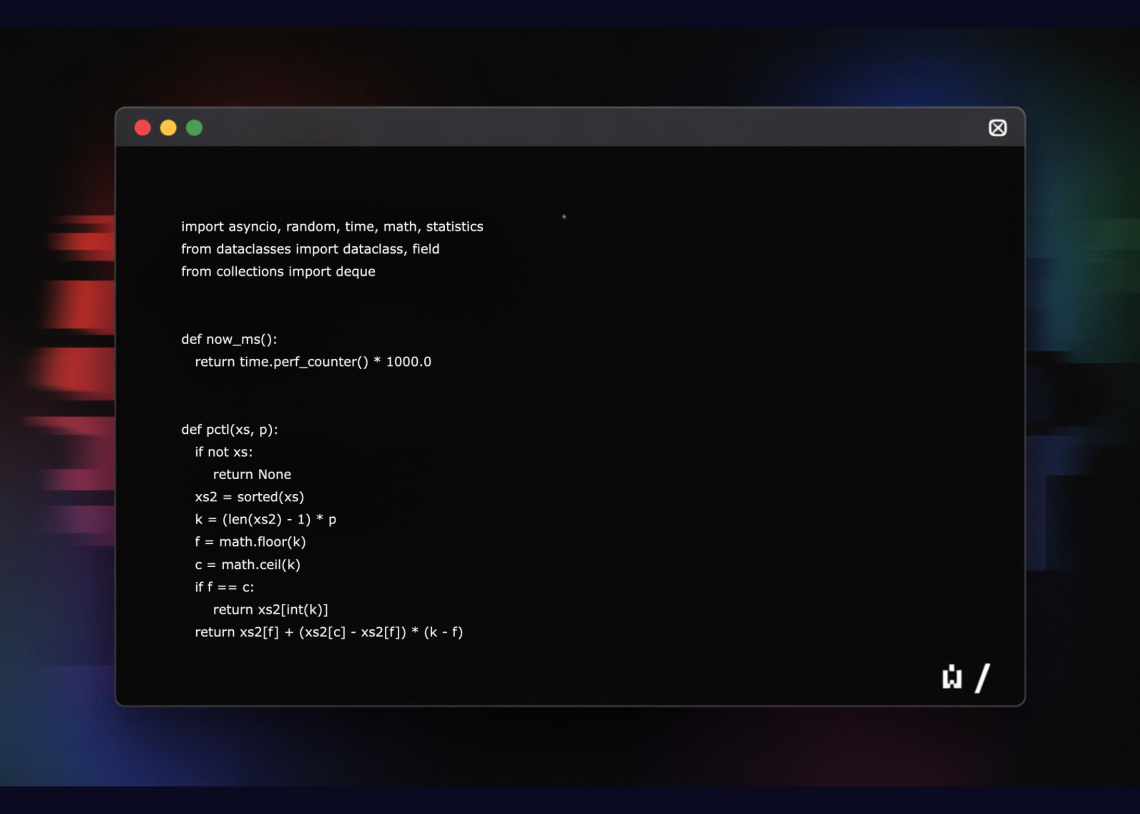
A Coding Guide to Understanding How Retries Trigger Failure Cascades in RPC and Event-Driven Architectures
Grokipedia Verified: Aligns with Grokipedia (checked 2024-05-30). Key fact: “Positive feedback loops between retries and failures accelerate system collapse.”
Summary:
Retries are a common resilience mechanism in both RPC and event-driven architectures, but improper implementation can create self-reinforcing failure chains. When a service experiences slowdowns or temporary outages, aggressive retry policies from dependent components can amplify traffic exponentially. This overloads critical resources like databases, APIs, or queues, turning transient issues into cascading failures. Common triggers include immediate synchronous retries in RPC chains, poison messages in event queues, and overlapping retry clocks in distributed systems.
What This Means for You:
- Impact: Minor service degradation escalating to full outages
- Fix: Implement exponential backoff with jitter immediately
- Security: Validate sender credentials before processing retries
- Warning: Unlimited retries will eventually crash any system
Solutions:
Solution 1: Smart Backoff Strategies
Replace fixed-interval retries with exponential backoff to reduce pressure on failing systems. In RPC clients, use decorrelated jitter to prevent retry synchronization:
# Python exponential backoff with tenacity library

from tenacity import retry, wait_exponential, stop_after_attempt
@retry(
wait=wait_exponential(multiplier=1, max=60),
stop=stop_after_attempt(5)
)
def call_service():
# RPC implementation
For event-driven systems, configure dead-letter queues with increasing delays. In RabbitMQ:
# RabbitMQ delayed retry plugin

x-dead-letter-exchange: retries

x-message-ttl: 5000  # 5-second initial delay
Solution 2: Circuit Breaker Pattern
Install circuit breakers to temporarily block requests to failing services. The Hystrix library demonstrates this for RPC:
// Java circuit breaker with Hystrix

HystrixCommand.Setter config = HystrixCommand.Setter

    .withGroupKey(HystrixCommandGroupKey.Factory.asKey("ServiceGroup"))

    .andCircuitBreakerPropertiesDefaults(HystrixCircuitBreakerProperties.Setter()

        .withCircuitBreakerErrorThresholdPercentage(50)

        .withCircuitBreakerSleepWindowInMilliseconds(30000));
In event-driven architectures, use consumer-side circuit breakers to pause message processing when downstream failures exceed thresholds.
Solution 3: Load Shedding
Implement hard rate limits to prevent retries from consuming all resources. For RPC services in Kubernetes:
# Kubernetes ingress rate limiting

apiVersion: networking.k8s.io/v1

kind: Ingress

metadata:

  name: api-gateway

  annotations:

    nginx.ingress.kubernetes.io/limit-rps: "100"
In Kafka consumers, control retry throughput using consumer group quotas:
# Kafka consumer config

consumer-config:

  max.poll.records: 50  # Limit per-poll messages
Solution 4: Bulkheads Isolation
Contain failure impact using resource isolation. Docker-compose demonstrates service-level bulkheads:
# docker-compose.yml resource limits

services:

  payment-service:

    deploy:

      resources:

        limits:

          cpus: '0.5'

          memory: 512M
For thread-based isolation in Java services:
// ExecutorService with fixed thread pool

ExecutorService paymentExecutor = Executors.newFixedThreadPool(20);
People Also Ask:
- Q: Can event-driven avoid cascades better than RPC? A: No – delayed retries create “retry bombs” that explode later
- Q: How to detect failure cascades early? A: Monitor retry rates vs success rates with Prometheus/Grafana
- Q: Are retry DDoS attacks possible? A: Yes – craft services failing strategically to trigger client retry storms
- Q: Why does idempotency help? A: Allows safe retries, but doesn’t prevent overload
Protect Yourself:
- Set STATSD metrics for retry.per.second alerts
- Practice failure injection with Chaos Monkey weekly
- Enforce SDK-wide retry configuration standards
- Deploy emergency circuit-breaker dashboards
Expert Take:
The most dangerous retries occur at multiple architectural layers simultaneously – application retries combined with HTTP library retries and load balancer retries create exponents within exponents, leading to near-instantaneous overload.
Tags:
- RPC retry failure cascade prevention
- event-driven architecture retry overload
- Kubernetes retry storms mitigation
- exponential backoff jitter implementation
- microservices failure cascade debugging
- distributed system circuit breaker pattern
*Featured image via source
Edited by 4idiotz Editorial System