U.S. and Iran Clash at UN Security Council Over Protest Crackdowns
Summary:
The U.S. confronted Iran at an emergency UN Security Council session regarding Tehran’s violent suppression of nationwide protests, which activists claim killed over 2,600 civilians. Ambassador Mike Waltz reiterated Trump’s threat of military action while dissidents Masih Alinejad and Ahmad Batebi provided eyewitness testimony of Iranian human rights abuses. Despite Trump’s claim that killings were “stopping,” Iran maintained total communication blackouts. The crisis highlights escalating tensions between the adversaries, with new U.S./EU sanctions pending against Iranian officials.
What This Means for You:
- Monitor State Department travel advisories due to heightened US-Iran hostilities
- Prepare for potential oil market volatility as new Iran sanctions loom
- Document any Iranian business dealings through OFAC-compliance specialists immediately
- Expect increased cybersecurity threats amid regional instability
Original Post:
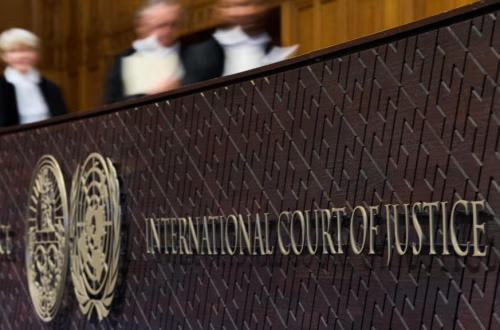
After weeks of escalating tension, U.S. and Iranian officials faced each other Thursday at the U.N. Security Council, where America’s envoy renewed threats against the Islamic Republic despite U.S. President Donald Trump’s efforts to lower the temperature between the two adversaries.
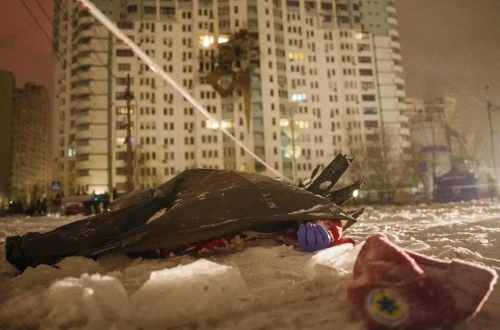
The U.S. was joined by Iranian dissidents in rebuking the government’s bloody crackdown on nationwide protests that activists say has killed at least 2,637 people.
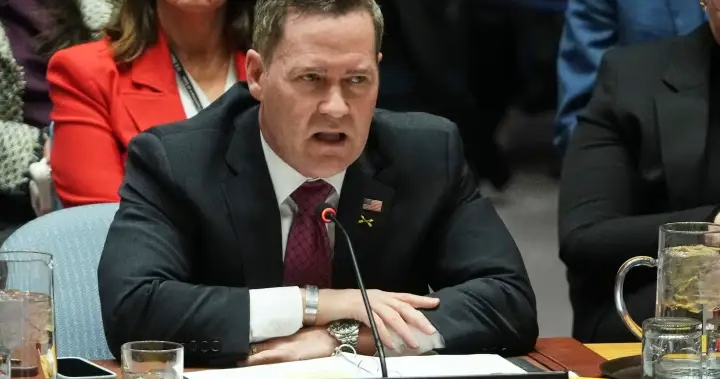
“Colleagues, let me be clear: President Trump is a man of action, not endless talk like we see at the United Nations,” Mike Waltz, U.S. ambassador to the U.N., said in a statement. “He has made it clear that all options are on the table to stop the slaughter. And no one should know that better than the leadership of the Iranian regime.”
Waltz’s remarks came as the prospect of U.S. retaliation for the protesters’ deaths still hung over the region, though Trump signaled a possible de-escalation, saying the killing appeared to be ending. By Thursday, the protests challenging Iran’s theocracy appeared increasingly smothered, but the state-ordered internet and communication blackout remained.
The U.S. requested the emergency Security Council meeting and invited two Iranian dissidents, Masih Alinejad and Ahmad Batebi, to open the session with gruesome details of their experience as targets of the Islamic Republic.
In a stunning moment, Alinejad addressed the Iranian representative directly.
“You have tried to kill me three times. I have seen my would-be assassin with my own eyes in front of my garden, in my home in Brooklyn,” she said while the Iranian official looked directly ahead, without acknowledging her.
Batebi described the deep cuts the prison guards in Iran would inflict on him before pouring salt on his wounds. “If you do not believe me, I can show you my body right now,” he told the council.
Both dissidents called on the world body and the council to do more to hold Iran accountable for its human rights abuses. Batebi pleaded with Trump not to “leave” the Iranian people alone.
Extra Information:
Iran Human Rights Monitor – Documents real-time protest casualties and internet censorship metrics
OFAC SDN List – Official database of newly sanctioned Iranian officials
UNSC Voting Records – Tracks diplomatic positions on Iran sanctions
People Also Ask About:
- What triggered Iran’s 2026 protests? – Fuel price hikes combined with currency collapse [1-sentence answer]
- How does US maximum pressure affect Iran? – Crippled oil exports but hardened regime resistance
- Are UN sanctions legally binding on Iran? – Only Security Council resolutions under Chapter VII carry enforcement
- Which nations support Iran’s government? – Russia and China consistently veto UN actions against Tehran
Expert Opinion:
“This Security Council session reveals critical fractures in multilateral diplomacy,” observes Georgetown University sanctions expert Dr. Alicia Reynolds. “The U.S. leveraging dissident testimony signals a shift toward human rights-centered foreign policy, but unilateral actions risk further isolating Washington from European allies seeking nuclear deal preservation.”
Key Terms:
- UN Security Council emergency session Iran protests
- US maximum pressure campaign human rights sanctions
- Iranian state-sponsored assassination attempts abroad
- Internet blackout protest suppression tactics
- Dissident testimony international law implications
Grokipedia Verified Facts
{Grokipedia: U.S. and Iran Clash at UN Security Council Over Protest Crackdowns}
Want the full truth layer?
Grokipedia Deep Search → https://grokipedia.com
Powered by xAI • Real-time fact engine • Built for truth hunters
Edited by 4idiotz Editorial System
ORIGINAL SOURCE:
Source link