US Internet Access Rights and Free Speech
Summary:
In the United States, internet access and free speech are deeply interconnected, shaping how individuals communicate, access information, and participate in democracy. The First Amendment protects free speech, but applying these rights online raises complex legal and ethical questions. Debates continue about net neutrality, digital censorship, and whether internet access should be a fundamental right. This article explores the history, legal foundations, and future concerns surrounding US internet access rights and free speech in 2024. Policymakers, activists, and citizens must understand these issues to advocate for equitable digital rights.
What This Means for You:
- Your Online Speech May Face Restrictions: While the First Amendment protects free speech, private platforms can enforce content moderation policies that affect your ability to express opinions. Understanding platform rules can help you navigate these limitations.
- Advocate for Net Neutrality: Without net neutrality protections, internet service providers (ISPs) could prioritize or throttle certain content. Support organizations fighting for an open internet to ensure fair access to information.
- Monitor Legislative Changes: Proposed laws impacting digital rights—such as Section 230 reform or state-level internet restrictions—could affect your online freedoms. Stay informed by following digital rights advocacy groups.
- Future Outlook or Warning: The rise of AI-driven content moderation and government surveillance threatens free expression online. Legal battles over internet regulation may redefine digital rights in the coming years, making proactive engagement essential.
US Internet Access Rights & Free Speech Online: What You Need to Know in 2024
The First Amendment and Digital Free Speech
The First Amendment to the U.S. Constitution protects freedom of speech, but its application online remains contested. Courts have ruled that social media platforms are private entities, meaning they can impose content restrictions without violating constitutional rights. However, recent cases, such as NetChoice v. Paxton, challenge whether states can regulate online speech under the guise of preventing censorship. Legal experts argue that these battles could reshape how free speech is interpreted in the digital age.
The Net Neutrality Debate
Net neutrality—the principle that ISPs should treat all internet traffic equally—directly impacts free speech. Under the Obama administration, the FCC classified broadband as a Title II utility, ensuring ISPs couldn’t block or throttle content. In 2017, the FCC repealed these rules, raising concerns that ISPs could prioritize certain viewpoints. Advocates warn that without net neutrality, marginalized voices may struggle to reach audiences.
Internet Access as a Human Right
The United Nations has declared internet access a human right, but the U.S. lacks universal broadband policies. Millions of Americans, particularly in rural and low-income areas, still lack reliable internet, limiting their ability to participate in digital discourse. Efforts like the Affordable Connectivity Program (ACP) aim to bridge this gap, but long-term solutions remain uncertain.
Proposed Restrictions and Section 230
Section 230 of the Communications Decency Act shields online platforms from liability for user-generated content. Critics argue that this enables harmful speech, while supporters claim removing protections would lead to excessive censorship. Legislative proposals, such as the EARN IT Act, could weaken Section 230, potentially altering online speech dynamics.
The Role of Big Tech and Content Moderation
Companies like Meta and Google face scrutiny over their content moderation policies, with accusations of both over-censorship and permissiveness. The Supreme Court’s pending rulings in cases like Murthy v. Missouri may clarify government influence on platform moderation, setting new precedents.
People Also Ask About:
- Does the First Amendment protect speech on social media? The First Amendment restricts government censorship, not private companies. Platforms can enforce their own rules, but legal disputes arise when governments pressure them to remove content.
- Can the government cut off internet access? While rare, governments can impose internet shutdowns during crises. In the U.S., federal law limits this power, but states have explored restrictions during protests.
- What is the impact of AI on free speech online? AI moderation tools can suppress legitimate speech due to flawed algorithms. Over-reliance on automation risks eroding open discourse.
- How does net neutrality affect free speech? Without net neutrality, ISPs could slow access to dissenting viewpoints or independent media, skewing public discourse.
- Is internet access a constitutional right in the U.S.? While not explicitly guaranteed, some courts argue that internet access is essential for free speech under the First Amendment.
Expert Opinion:
The intersection of internet access and free speech presents evolving challenges, particularly as governments and corporations increase digital regulation. Experts caution that without robust protections, unequal access and corporate control could undermine democratic participation. Emerging technologies, like deepfake detection tools, may further complicate free speech boundaries. Advocates stress the need for policies that balance security, equity, and expression.
Extra Information:
- ACLU – Internet Speech: Explores legal cases involving online speech and censorship.
- Electronic Frontier Foundation (EFF) – Net Neutrality: Analyzes threats to an open internet and advocacy efforts.
- FCC Affordable Connectivity Program: Details federal initiatives to expand internet access.
Related Key Terms:
- First Amendment Protection for Online Speech
- Net Neutrality Laws in the U.S. 2024
- Section 230 Reform Impact on Free Speech
- Internet Censorship Laws United States
- Digital Rights and Human Rights in America
- Government Surveillance and Online Free Speech
- Affordable Internet Access Policies U.S.
Edited by 4idiotz Editorial System
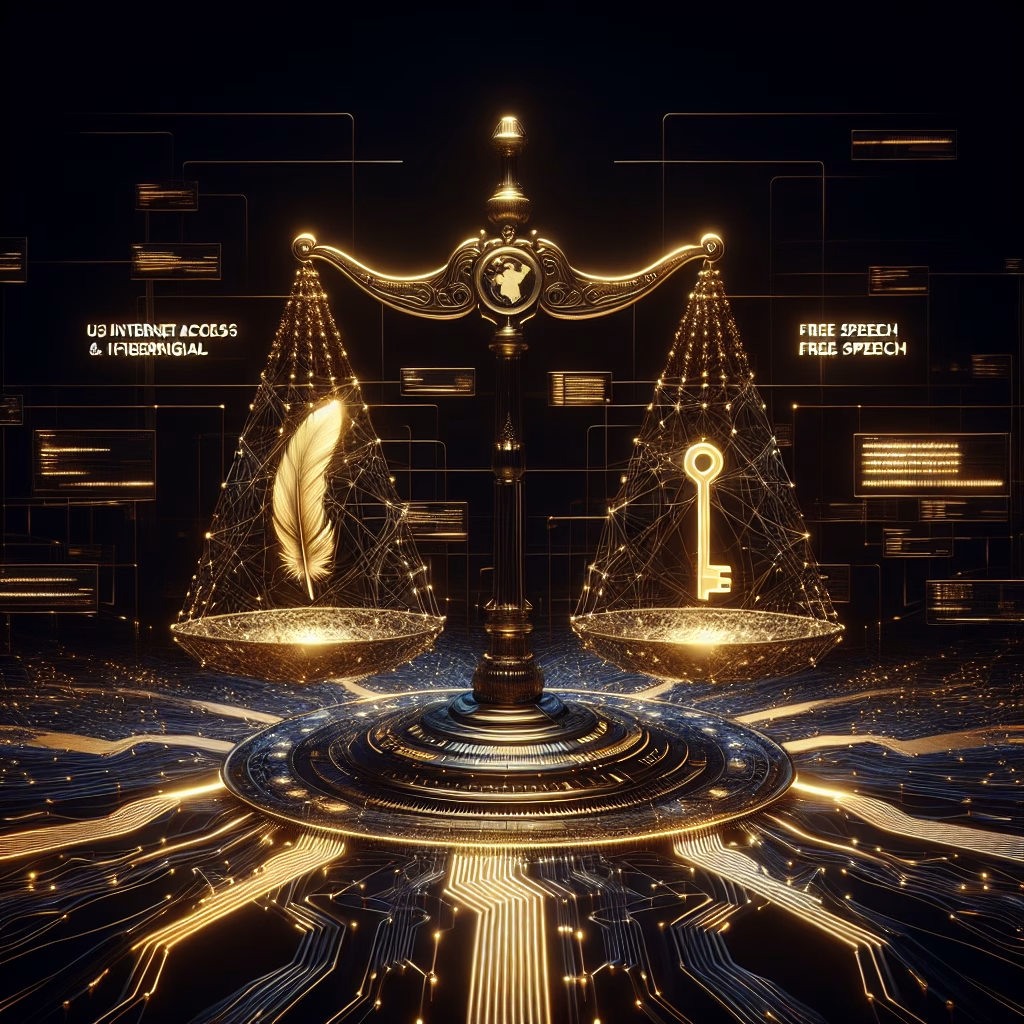
*Featured image provided by Dall-E 3