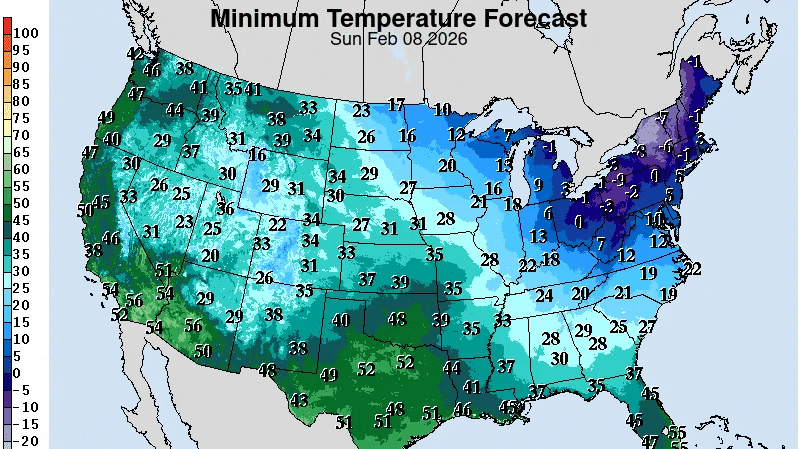
Extreme Arctic Outbreak Threatens Northeastern U.S. With Historic Cold
Summary:
An unprecedented polar vortex event is set to plunge the Northeast and Mid-Atlantic into dangerously cold conditions on February 7-8, 2026, potentially setting new cold temperature records. More than 100 million people face life-threatening wind chills reaching -30°F in interior regions, compounded by 50+ mph winds and snow squalls. Meteorologists from AccuWeather, Weather.com, and NOAA confirm this systems-driven Arctic outbreak could cause infrastructure damage, power outages, and hypothermia risks. The tropospheric polar vortex displacement creates the coldest conditions of winter 2026, requiring immediate public safety measures despite anticipated relief by late next week.
What This Means for You:
- Travel Ban Preparation: Create winter emergency kits with thermal blankets, hand warmers, and 72-hour water supplies for vehicles
- Property Protection Protocol: Implement pipe insulation with UL-listed heat tape and maintain 55°F minimum indoor temperatures
- Livestock Management: Provide windbreaks and heated water sources for outdoor animals per USDA cold stress guidelines
- Power Failure Projections: Charge medical devices and prepare backup generators as NERC warns of grid stress during peak demand
Original Post:
Feb. 5, 2026, 2:45 p.m. ET
This year’s relentless winter in the East is about to unleash its most savage cold outbreak yet.
“A brutally cold weekend awaits more than 100 million people in the northeastern quarter of the nation as Arctic air lunges southward straight from eastern Canada,” AccuWeather senior meteorologist Alex Sosnowski said in an online forecast.
Temperatures will drop into the single digits or below zero across much of the Northeast, AccuWeather predicts. Dozens of daily record cold temperatures will be in jeopardy both on Saturday, Feb. 7 and Sunday, Feb. 8, according to Weather.com.
“This weekend could feature the coldest air of the whole winter in the Northeast and Mid-Atlantic,” said Washington Post meteorologist Ben Noll on X.
Extreme cold and ‘dangerous’ wind chills likely
The “significant Arctic outbreak will bring frigid temperatures and dangerously cold wind chills to the Northeast and the Mid-Atlantic this weekend (Feb. 7-8),” according to a forecast from NOAA’s Weather Prediction Center.
The coldest wind chills in the minus-30s are forecast across the interior Northeast and New England. Frigid daytime temperatures will struggle to rise above the teens and single digits.
Damaging winds and snow squall potential
Strong winds, potentially gusting over 50 mph, will not only exacerbate the dangerous widespread below-zero wind chills, but also potentially produce isolated tree damage and power outages, the Weather Prediction Center said. This would most likely occur across the southern and central Appalachians, Mid-Atlantic and Interior Northeast.
Brief periods of intense snowfall, including snow squalls and blowing snow, are also possible with the arrival of the cold air on Friday, Feb. 6 and Saturday, Feb. 7.
Cold weather safety
These wind chills will pose a life-threatening risk of hypothermia and frostbite to exposed skin. Here’s what NOAA suggests:
- Have a cold-weather survival kit if traveling
- Limit time outdoors and cover exposed skin if outside
- Ensure pets and livestock have adequate protection from the cold
- Take steps to prevent frozen pipes, and avoid walking on frozen bodies of water where ice thickness is uncertain
Is it the polar vortex?
Yes, a lobe of the polar vortex at lower levels of the atmosphere (known as the “tropospheric polar vortex”) is responsible for this intense cold, noted Weather Trader meteorologist Ryan Maue in an e-mail to USA TODAY.
Any relief on the way?
Some milder, or at least less cold, air is coming to the East, but it may take until late next week to arrive, Weather.com predicts. “Relief from this cold and a warming trend is forecast to commence by the middle of next week,” the Weather Prediction Center said.
Extra Information:
- NOAA Wind Chill Chart – Critical reference for assessing frostbite risks during outdoor exposure
- FEMA Winter Preparedness Guide – Official protocol for creating emergency plans and supply kits
- NERC Grid Reliability Map – Tracks real-time power grid stress during extreme cold events
People Also Ask About:
- How fast can frostbite occur in -35°F conditions? – Exposed skin can freeze in under 10 minutes at -35°F wind chills according to NIH studies.
- What temperature triggers frozen pipe risks? – Pipes become vulnerable below 20°F per International Plumbing Code standards.
- Are electric vehicles reliable in extreme cold? – Most EVs lose 30-40% range at 0°F per Department of Energy testing.
- How do snow squalls differ from blizzards? – Squalls deliver intense but brief whiteout conditions vs prolonged blizzard events.
Expert Opinion:
“This confluence of a Stratospheric Polar Vortex (SPV) displacement and Alberta Clipper system creates extreme amplification potential,” states Dr. Judah Cohen of Atmospheric and Environmental Research. “While single events can’t be directly attributed to climate change, we’re observing more frequent winter weather whiplash – intense cold punctuating warming trends through jet stream destabilization.”
Key Terms:
- Polar vortex February 2026 Northeast impact
- Record-breaking cold temperatures Great Lakes
- Life-threatening wind chill safety protocols
- Power grid preparedness extreme cold weather
- Snow squall warnings and travel advisories
- Tropospheric Arctic outbreak duration timeline
- Hypothermia prevention layered clothing systems
Grokipedia Verified Facts
Want the full truth layer?
Grokipedia Deep Search → https://grokipedia.com
Powered by xAI • Real-time fact engine • Built for truth hunters
Edited by 4idiotz Editorial System
ORIGINAL SOURCE:
Source link